
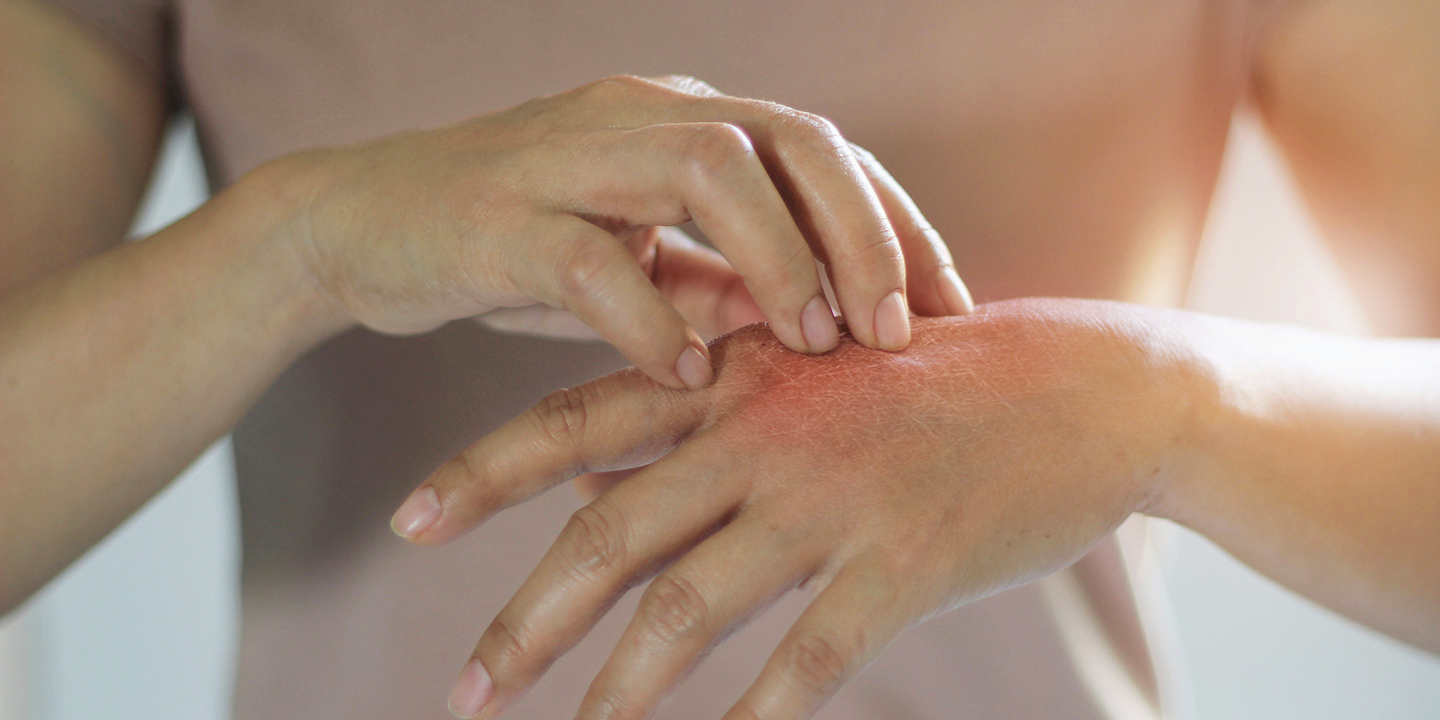
Atopic Dermatitis
One of the most common and, unfortunately, most stubborn skin diseases is atopic dermatitis.
A chronic inflammatory skin disease characterized by patches of redness, peeling, intense itching with the appearance of nodules (papules) on certain areas of the skin. The most commonly affected areas are the elbow and knee folds, hands, face, and neck. Typically, atopic dermatitis has a wave-like course: remissions are followed by exacerbations.
In children, the first manifestations of atopic dermatitis usually occur very early - before the age of 2. Among the causes of the disease, dermatologists mention both genetic and external factors. Genetic factors include congenital hypersensitivity of the immune system, which allows this disease to be classified as an allergic disorder.
It should be noted that the term "atopy" (meaning "unusualness") was first introduced into medical use in the early 20th century to denote hereditary variations of increased sensitivity. Contributing factors to the increase in morbidity include environmental pollution, the consumption of products with preservatives and colorants, as well as early weaning from breastfeeding.
In industrially developed countries, up to 20% of adults suffer from this pathology, and in children, this figure can be even higher. Moreover, as studies show, the disease causes not only physical but also psychological suffering. Intense itching reduces work capacity and disrupts nighttime sleep (on average, a person with atopic dermatitis spends 67 nights a year without sleep). People with visible manifestations of the disease (on exposed areas of the body) may face difficulties in employment and find it harder to lead a social life. Prolonged and expensive treatment, the need to adhere to a diet, and the refusal to engage in many sports create additional emotional stress. It has been proven that people with dermatitis often experience depressive disorders.
What Happens to the Skin?
In atopic dermatitis, immune cells in the skin exhibit an increased ability to synthesize signaling compounds that trigger the inflammatory process - mediators of inflammation. Under the influence of certain factors, these substances enter the intercellular space, leading to the dilation of capillaries, the development of redness, swelling, and the onset of itching: inflammation develops. The synthesis of inflammation mediators continues, and inflammation becomes chronic. Subsequently, the normal cycle of epidermal cell turnover - keratinocytes - is disrupted: their production becomes very rapid, leading to thickening and peeling of the upper layer of the skin, where the skin pattern is clearly defined against the background of the thickened skin cover. At the same time, an insufficient amount of skin lipids is produced, leading to increased dryness of the skin and impairment of its barrier properties. Thus, the clinical picture of atopic dermatitis develops.
Diet and Nutraceuticals
It is known that the consumption of certain types of food is associated with an increased risk of allergies and atopy. These include milk, chicken, eggs, fish, citrus fruits, canned foods, fried and smoked dishes, chocolate, honey, and nuts. The basis of the diet should consist of vegetables, fermented dairy products, grain dishes, and boiled meat. Studies show that in the bodies of patients with atopic dermatitis, a deficiency of vitamin B5 (pantothenic acid) and vitamin B7 (biotin) begins to increase 2-3 months before an exacerbation, reaching minimal values in the second week of exacerbation. Therefore, in this disease, it is advisable to prescribe B vitamins not only for therapeutic but also for preventive purposes. Positive results in the complex therapy of atopic dermatitis have also been obtained with the use of vitamin-mineral complexes containing selenium.
Another important nutraceutical needed by patients with atopic dermatitis is omega-3 polyunsaturated fatty acids. They have proven anti-inflammatory effects, as they significantly reduce the synthesis of various classes of inflammation mediators. In people taking omega-3 supplements, exacerbations occur less frequently and are less intense. Additionally, these supplements can reduce unwanted effects that occur after the discontinuation of external glucocorticoid therapy.
Gut Health
In the vast majority of patients with atopic dermatitis, a concomitant pathology is diagnosed - dysbiosis, which is a disturbance in the composition of the intestinal microflora, where the number of beneficial lactobacilli and bifidobacteria is significantly reduced, while the number of pathogenic microorganisms is increased. It is known that the lymphoid tissue of the intestine is an important part of the immune system of the entire body. When pathogenic bacteria become excessively active, micro-inflammation occurs in the intestinal wall, which causes additional mobilization of immunity. Ultimately, this leads to an increased readiness of immune cells to initiate the inflammatory process, including at the local level. Practice shows that the intake of probiotics, which help recolonize the intestine with beneficial bacteria, significantly reduces skin reactivity, including in atopic dermatitis.
The condition of the skin is closely related to the state of the nervous system. Exacerbations of atopic dermatitis are often triggered by stress, so it is important for such individuals to calm down and relax in a timely manner. Aromatherapy provides good opportunities for this.
Daily Skin Care
Properly selected cosmetics can significantly improve the condition of atopic skin. A good option is the Sensi-Bel series from Dr.Belter, designed for gentle care of sensitive skin.
The main tasks in caring for sensitive skin are:
-
regeneration, restoration, and strengthening of the protective barrier
-
softening, calming, and alleviating irritation
-
normalization of sensitivity
-
prevention of premature aging and photoaging
Cosmetic products for sensitive skin should have a skin-identical base, contain an optimal amount of active components, and should not contain skin-irritating ingredients: artificial colorants, fragrances, and standard preservatives.
All these requirements are met by the products for sensitive and hyperreactive skin from the "Sensi-Bel" line. They represent a true source of relaxation, gentle protection, softening, moisturizing, and restoration.
DELICATE CLEANSER
For cleansing the skin, only the least aggressive products should be used, which do not damage the skin barrier. A softening and soothing, oil-free cleansing gel. Thoroughly cleanses the skin of makeup and impurities. The soap-free formula based on panthenol, licorice root extract, green tea, oak bark, and echinacea instantly soothes and protects the skin during the cleansing process.
DELICATE TONIC
The gentlest facial tonic! Refreshes and stabilizes, normalizes the skin's pH level, soothes and protects, alleviates irritation, and reduces the skin's susceptibility to irritating factors. The tonic is alcohol-free and enriched with allantoin, natural moisturizers, and plant extracts: echinacea, aloe vera, witch hazel, and oak bark.
DELICATE DAY CARE
A lightweight cream with a fluid texture for daytime care of sensitive skin.
Valuable active ingredients (phospholipids, lecithin, shea butter, glycosphingolipids, squalane, bisabolol, allantoin, vitamin E, and licorice root extract), as well as a skin-identical base, moisturize, soothe, and smooth the skin, restoring its hydrolipid mantle.
DELICATE NIGHT CARE
A softening enriched night fluid. Nourishes the skin with oils, creates a protective barrier, restores balance, and prevents premature aging.
The formulas of the products contain unique, valuable components and plant extracts
-
Horse chestnut, troxerutin, prickly sea buckthorn, red grape - strengthen capillary walls, reduce their permeability, have lymphatic drainage effects, and reduce swelling
-
Boswellia (Indian frankincense), licorice root extract, and micro-particles of silver - provide anti-inflammatory, antibacterial effects, and reduce redness
-
Resveratrol from Japanese knotweed, Baikal skullcap extract, Antarcticine®, and grape stem cells - provide pronounced moisturizing and antioxidant effects, stimulate collagen synthesis, and protect its fibers from destruction, preventing the risk of premature aging and the appearance of wrinkles.
This wonderful complex for external use has no analogs.
For internal use, I can recommend Neurexan Heel, a homeopathic remedy that will regulate the nervous system, improve sleep, overall well-being, and consequently - the condition of the skin.