
Plasmolifting (PRP Therapy) in Kyiv
The secret of eternal youth is natural rejuvenation at the cellular level.
- Duration of the procedure: from 30 to 60 minutes.
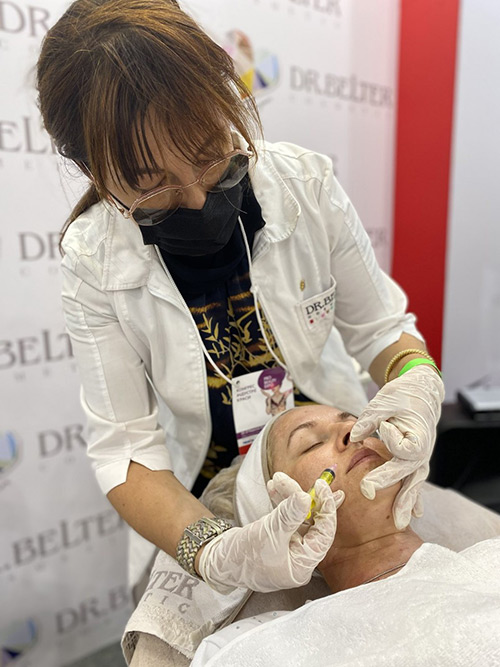
- Uses German professional cosmetics DR.BELTER.
- The procedure is performed by cosmetologist Larysa Lonchar (professional experience 23 years).
Sign up for a consultation now and get a 10% discount on your first procedure
Allow yourself smooth and radiant skin
During the consultation, the cosmetologist:
-
Will select the right procedures and the number of necessary sessions;
-
Will answer all your questions;
-
Will provide an estimate of the total cost.
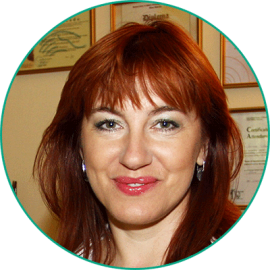
Cosmetologist Larysa Lonchar. Professional experience: 23 years.
Cost of plasmolifting?
| Procedure | Duration | Price |
|---|---|---|
| Plasma therapy: face, neck, décolleté and hairline (4 tubes) | 60 min | 4,750 UAH |
| Plasma therapy: periodontal disease prevention (3 tubes) | 60 min | 3,450 UAH |
| Plasma therapy for chronic inflammatory spine conditions (2–4 tubes) | 60 min | from 2,150 UAH |
| Plasma therapy for general wellness (2–4 tubes) | 60 min | from 2,150 UAH |
What is facial plasmolifting?
Plasmolifting (plasma therapy) is an injection procedure used for rejuvenating and tightening the skin of the face, as well as improving the structure and growth of hair. It uses plasma enriched with platelets taken from the patient's own blood.
The procedure creates a mild stress effect that provokes the onset of active restorative processes. The rejuvenation process occurs at the cellular level: dermal cells are renewed, and cellular metabolism is significantly improved.
This leads to an immediate effect: refreshing the skin, smoothing out mimic wrinkles, and evening out the complexion.
Moreover, plasma therapy promotes the regeneration of wound surfaces of the skin and helps to resist infections without the use of medications.
Today, plasmolifting is one of the few techniques that leads to facial skin rejuvenation without various devices, surgical knives, and chemical components.
The technique is indicated for the presence of wrinkles of varying depths, dryness, decreased tone, and deformation of the facial oval. It is also recommended for treating acne, smoothing scars, and stretch marks.
Why your own plasma works: composition and principle
Plasma is 90% water and 10% biologically active substances dissolved in it: proteins, amino acids, vitamins, minerals, enzymes, hormones, glucose and lipids. This "cocktail" underlies the life of every cell in the body, which is why plasma is called a natural stimulator of tissue regeneration.
During the treatment about 15 ml of the patient's own (autologous) blood is taken and placed in a centrifuge. There the platelet-rich plasma is separated from the red blood cells, and the platelet concentration becomes much higher than at the start. This purified, enriched plasma is injected into the problem areas, where it starts the repair process: fibroblasts produce collagen more actively, and the structure of the dermis gradually recovers.
Plasma has a neutral pH (7.34–7.43), causes no allergy or rejection, and combines well with other cosmetic treatments. In particular, after plasma therapy the dermis recovers faster after peels and laser resurfacing. More — in Larysa Lonchar's article "Plasma therapy: beauty from your blood".
Where plasma therapy is used: face, hair, gums
Plasmolifting in Kyiv at Biotonika is not only facial rejuvenation. Plasma therapy is used in several areas:
- Cosmetology. Prevention of ageing, skin recovery after stress, acne, seborrhoea, post-acne, scars (including stretch marks), pigmentation, pronounced dryness. The treated area is the face, neck, décolleté and the hairline.
- Trichology. Hair loss, dandruff, an itchy scalp, overactive sebaceous glands that make hair greasy quickly.
- Dentistry. Prevention of periodontal disease.
- General health. The table also lists plasma therapy for chronic inflammatory diseases of the spine and plasma therapy for general wellbeing.
Larysa Lonchar includes plasma therapy among the treatments indicated for the "tired" type of ageing: when muscles weaken, soft tissues lose tone, the nasolabial folds become sharply defined and the corners of the mouth droop. Plasmolifting price depends on the area and the number of tubes — all options are in the table above.
The routine before, during and after the course
Plasma therapy uses your own blood, so the result also depends on how you prepare.
On the day of the treatment. Ideally the session is done in the morning on an empty stomach. If you cannot skip food, have a light, fat-free breakfast. Avoid fatty and fried food the day before.
Your period. Do not plan plasma therapy for the first 2–3 days of menstruation. Be sure to tell the doctor if the treatment falls in this period.
Sun. Avoid sunlight for two weeks before plasma therapy, throughout the course and for as long after it. Use sun protection whenever you go out, whatever the season.
Other treatments. Avoid aggressive cosmetic treatments for a week after a session.
Before the course the doctor may prescribe preliminary tests — complete them before the first session.
What to realistically expect from plasmolifting
Rejuvenation with substances from your own blood is the least radical cosmetic treatment. It smooths fine wrinkles, improves skin colour and normalises its hydration. But do not expect miracles: every body has its own features. A person with thin hair will not get a thick mane after plasma therapy, and scarred skin will not become perfectly smooth.
Plasma injections are done as a course. The first changes show during the course, the final result after it ends. How many sessions you need will be decided by the cosmetologist after an in-person examination, and to maintain the effect facial plasmolifting is repeated at least once a year.
Cosmetologist Larysa Lonchar
My name is Larysa Lonchar, I am a cosmetologist.
I have been in love with my profession since 2000, making people beautiful and freeing them from aesthetic imperfections through biological regulation of beauty.
With my 20 years of experience in cosmetology, I prefer methods of preserving beauty and health based on optimizing the body's internal resources and regenerative medicine.
Biopuncture (mesotherapy), plasma therapy, Laennec therapy, improving skin quality and facial lifting through natural beauty preservation using comprehensive facial skin care based on the use of ultrasound atraumatic facial cleansing, non-injection oxygen oxygen masks, a combination of microcurrents, phototherapy, and German cosmetics Dr.Belter.
Patients who regularly undergo care seek injection methods of introducing preparations based on hyaluronic acid and calcium hydroxyapatite much less frequently.
Main education: Higher medical.
Specialization: Homotoxicology (proponent of bioregulatory medicine and cosmetology).
Additional education:
-
Cosmetology courses at the University of the Stamenkovich Brothers (Serbia)
-
Homotoxicology courses at the Academy of Biological Medicine
-
Homeomesotherapy courses in aesthetic medicine
-
Courses in physiological regulatory medicine: Method "Integrum", "Oligoelements", "Bach flowers"
-
Radionova School courses — Spanish massage techniques for the face
-
Mesotherapy courses
-
Botulinotherapy courses
-
Thread lifting courses
-
Radiesse contouring courses
Professional experience: 23 years
Advantages and disadvantages of plasmolifting
The main advantage of plasmolifting is that the active component used is the patient's own purified blood. For this reason, various consequences and complications are minimized. Let's consider other benefits:
-
The effect of the procedure lasts for several years if a full course of plasmolifting is performed. The number of sessions is determined individually, but in most cases, 4-6 manipulations are sufficient.
-
No rehabilitation period. Immediately after the procedure, a person can return to their usual lifestyle without any restrictions.
-
The manipulation is completely safe for the body. The risk of infection is excluded, as the patient's own blood, which has undergone special purification, is used during the procedure.
-
Plasma is not rejected by the body, and allergic reactions are also excluded.
-
High efficiency – facial tone is evened out, and skin rejuvenation occurs at the cellular level.
-
The procedure can be performed from the age of 18 if there are valid reasons for resorting to this cosmetic method.
-
Plasmolifting can be combined with other cosmetic procedures. Specialists assure that the introduction of plasma enhances their effect.
Among the disadvantages, one can note the pain of the manipulation and the need to undergo a full course of plasmolifting. Some note the relatively high cost of the cosmetic procedure.
Indications for plasmolifting
This rejuvenating procedure is recommended in the following cases:
-
Couperose.
-
Age-related changes.
-
Acne, pimples.
-
Uneven facial tone.
-
Mimic wrinkles.
-
Loss of elasticity and skin tone.
-
Presence of scars after acne.
-
Ptosis (skin sagging).
Contraindications for plasmolifting
Plasmolifting has some contraindications – its use is limited in the following cases:
-
Pregnancy period.
-
Breastfeeding.
-
HIV, diabetes, hepatitis.
-
Other blood diseases.
-
Inflammatory processes in the body in the acute stage.
-
Malignant neoplasms.
Another relative contraindication is the menstrual period. During this time, it is not recommended to perform plasmolifting. The optimal option is 2-3 days after the end of menstruation. Otherwise, undesirable consequences may arise: bleeding at the injection sites, low effectiveness of the procedure.
Preparation period
Since plasmolifting involves the use of one's own blood, the procedure is not recommended to be performed during illness or unsatisfactory health. For maximum effectiveness, it is recommended to follow a few simple rules:
-
Inform the doctor about all medications you are taking. Some tablets may provoke blood thinning, which is highly undesirable.
-
Try not to use painkillers for a week.
-
Maintain a healthy lifestyle, review your diet. Try to saturate your diet with only beneficial vitamins and microelements. Be sure to include fresh vegetables, fruits, meat, and dairy products in your diet.
-
Eat more berries and fruits that contain the maximum amount of vitamin C.
-
Try to quit smoking two days before the procedure. Alcohol should be excluded for 2 weeks before the upcoming manipulation.
In case of a cold or poor health, postpone the procedure for some time.
At what age is plasmolifting applied?
Specialists assure that anyone who has reached adulthood can undergo plasmolifting. This technique is performed at the first signs of skin aging or when there are skin problems on the face. At the age of 18 to 25, this technique is relevant for evening out skin tone, as well as for eliminating scars from acne and pimples.
How is the plasmolifting procedure performed?
The duration of one session is from 20 to 30 minutes. First, blood is drawn from the patient's vein. About 15 ml of blood is sufficient for one procedure. It is then placed in a special centrifuge, where plasma is separated and enriched with platelets. The resulting composition is then drawn into a syringe and injected under the skin in the problem areas. For those with a low pain threshold, a special gel with an analgesic effect is applied to the skin before the injections.
Sometimes, the day after plasmolifting, slight swelling may be observed at the injection sites. Don't worry, this is a normal reaction to the injections. After a couple of days, there will be no trace of the swelling and redness.
Recovery period
One of the advantages of facial plasmolifting is the absence of a recovery period. Almost immediately after the procedure, the patient can return home and lead their usual lifestyle. Taking hot baths, visiting saunas, and solariums should be postponed for just 1-2 days.
Results of plasmolifting
How many sessions are needed for maximum effect will be determined by your cosmetologist after a personal examination. The number of manipulations depends on the desired and initial condition of the skin. Typically, 5-7 procedures are sufficient for a visible effect. Between procedures, a short interval of 8 to 10 days should be observed.
As a result, the following changes can be noted:
-
The skin of the face acquires an even tone.
-
Mimic wrinkles disappear.
-
A natural blush appears.
-
The skin of the face becomes hydrated and elastic.
-
Scars from acne disappear.
To maintain the effect, it is recommended to perform facial plasmolifting at least once a year. Be sure to consult with a doctor and exclude contraindications before resorting to rejuvenating techniques.
Questions and answers
Is plasmolifting painful?
The plasma itself causes no pain; only the injection may be slightly uncomfortable. For a low pain threshold, a numbing gel is applied to the skin before the injections.
How many treatments are needed?
The number of sessions is decided by the cosmetologist after an examination: it depends on the skin and the desired result. In most cases 4–6 treatments are enough. The first results show during the course, the final ones after it ends.
How should I prepare for plasmolifting?
Ideally the treatment is done in the morning on an empty stomach or after a light, fat-free breakfast, and fatty and fried food is avoided the day before. Do not plan it for the first 2–3 days of your period.
Can I sunbathe during the course?
No. Avoid the sun for two weeks before plasma therapy, throughout the course and for as long after it, and use sun protection whenever you go out, whatever the season.
What else is plasma therapy used for besides the face?
For hair (hair loss, dandruff, an itchy or oily scalp), in dentistry (prevention of periodontal disease) and for general health — these options are in the treatment table.
Useful articles
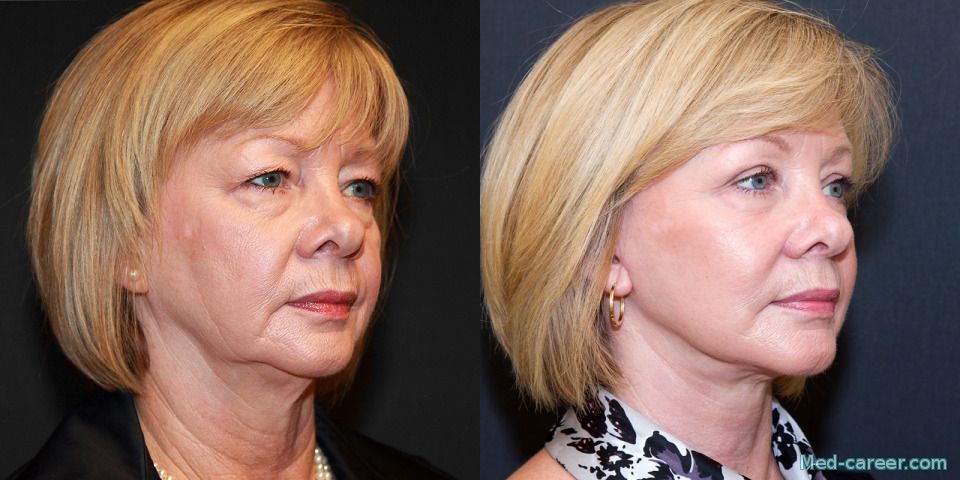
Plasma Therapy (PRP Facial): How Your Own Plasma Works and What to Expect
Plasma therapy uses plasma from your own blood: how the treatment and course work, preparation, contraindications and realistic results.…
Healthy Hair is Possible
Having beautiful hair is very important for anyone. But it is worth remembering that the beauty of hair is inextricably linked to its health…

Skin Ageing Types: How to Identify Yours and What to Do
Four types of skin ageing — muscular, fine-wrinkled, deformation and tired: the signs of each and which treatments are recommended for each …
Cosmetic Treatments Cheat Sheet: What Helps with What
Which cosmetic treatments help with wrinkles, pores, pigmentation, acne, volume loss, hair loss and puffiness — a cheat sheet table.…