
There is an ancient Indian legend:
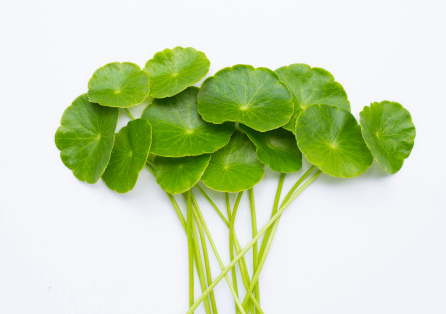
once a hunter saw a wounded Bengal tiger healing itself with an unusual plant with round leaves - rolling in its thickets, chewing on the greenery, and then licking its wounds. This miraculous plant is called "tiger grass." But this is just one of its dozens of names.
The official name of tiger grass is centella asiatica.
(Centella asiatica). In almost all languages of Southeast Asia, centella has its own indigenous names, sometimes very vivid: in some regions of India, centella is called mandukaparni (leaf resembling a frog), in Burma - mingkwar (horse hoof), in the Philippines - tahip kool (snail shell) or yahong (small cup), in Thailand - bua bik (earth lily), in Sri Lanka - gotu kola (cut leaf). Such a variety of names does not prevent the inhabitants of Asian countries from unanimously admiring the healing properties of centella. For millennia, traditional medicine in this region has used tiger grass to strengthen nerves and blood vessels, improve memory, heal wounds, and prevent aging. In Ayurveda, centella is classified as a brain tonic ("brahmi"), which helps to clear the mind and understand higher reality. Additionally, centella is considered a sacred plant of Saraswati - the Hindu goddess of knowledge, arts, and wisdom. Finally, fresh centella leaves with their sweetish taste are valued not only as medicine but also as a gourmet culinary ingredient. They are eaten raw in salads and nutritious vegetable porridge, added to rice, coconut milk, and sweet drinks.
From a scientific perspective
As early as the 19th century, centella attracted the interest of European scientists. They observed how local doctors successfully treated wounds, ulcers, burns, and even leprosy with dry centella powder. However, it was not until the mid-20th century that centelloids were isolated from centella extract - unique active substances that belong to the group of triterpenoid saponins. The most important of them are four compounds: asiaticoside, madecassoside, and their corresponding acids - asiatic acid and madecassic acid. Today, the number of scientific works dedicated to the medical effects of centella is counted in the hundreds, as it is one of the most effective medicinal plants with an astonishingly wide range of effects. Moreover, cosmetologists show particular interest in the various possibilities of centella to slow down skin aging.
Stimulation of collagen synthesis
It has been proven that the active substances of centella extract promote the expression and activation of growth factors that enhance the synthesis of collagen types I and III. Epithelialization occurs in the most optimal way, without the risk of hypertrophic scars forming. The collagen formed is characterized by high strength and elasticity. Studies have confirmed that under the influence of centella triterpenes, the formation of lysine and proline - amino acids involved in building the collagen molecule - is enhanced. Additionally, madecassoside inhibits the action of matrix metalloproteinase - an enzyme that destroys collagen fibers and is activated with age. Interestingly, the positive effect of madecassoside on collagen synthesis is significantly enhanced in combination with vitamin C.
Effect on capillaries
Centella, by stimulating collagen synthesis, also improves angiogenesis, i.e., the process of forming new capillaries. At the same time, the walls of existing capillaries are strengthened, and their permeability is reduced. A branched capillary network is necessary for the normal course of metabolic and restorative processes, full oxygen and nutrient supply to the dermis, as well as for the timely removal of metabolic waste. In addition to madecassoside, the natural extract of centella contains magnesium, which has a spasmolytic effect on capillaries and thereby also improves tissue nutrition.
Increased skin hydration
Under the influence of centelloids, the synthesis of hyaluronic acid and other skin mucopolysaccharides - organic compounds that retain moisture in the deep layers of the skin - is also enhanced. This helps keep the skin smoother and firmer, and additionally creates a favorable environment for restorative reactions.
Antioxidant activity
Madecassoside has pronounced antioxidant activity, protecting the skin from damage by free radicals. This property of centella is especially valued by residents of southern countries, where an excess of ultraviolet light creates conditions for accelerated photoaging. However, even in northern latitudes, the skin often suffers from free radical attacks - for example, under the influence of smog or tobacco smoke. Free radicals are also formed during chronic inflammatory processes, which can negatively affect the condition of the skin. Furthermore, by reducing the level of free radicals, centella extract lowers the risk of unwanted pigmentation spots.
Anti-inflammatory action
In traditional medicine of Asian countries, tiger grass has long been used to combat skin inflammation, including chronic diseases such as dermatitis and psoriasis. The anti-inflammatory action of centella is also confirmed by modern scientific studies. Today, the widely recognized role of chronic microinflammation of tissues in their premature aging processes is acknowledged. Therefore, the anti-inflammatory properties of centella contribute to the prolonged preservation of youthful skin.
Centella in cosmetics
The wide range of anti-aging properties makes Asian centella one of the most valuable ingredients in cosmetics for aging skin. Centella excellently heals wounds, has anti-inflammatory and rejuvenating effects. Cosmetics with centella effectively relieve irritation, make the skin firmer, combat free radicals, and weaken the effects of UV rays.
The German company Dr.Belter could not overlook such a valuable natural ingredient and, of course, added it to its cosmetics. For example, in the enzyme cream peeling ENZYME CREAM PEELING from the Intensa series, which, thanks to its unique composition:
promotes the exfoliation of dead cells
eliminates lipid deficiency and provides a feeling of smoothness
improves skin tone
reduces the thickness of the stratum corneum, preparing the skin for further intensive care
cleanses pores
helps reduce pigmentation spots
has antioxidant action
Centella, being a broad-spectrum agent, is actively used in mesotherapy as a monodrug and a component of various cocktails.
The preparation stimulates lipolysis and the regeneration process of dermal layers. It possesses anti-inflammatory and antioxidant properties. It contributes to strengthening blood vessels. The extract of centella asiatica restores the tone of capillaries and also blocks the development of intercellular edema. It is used to combat all types of cellulite, varicose veins, couperose, lymphostasis, swelling, and photoaging.
If you have developed an interest and desire to try and see the effects of this miracle plant, I invite you to procedures using it.
To make an appointment, call 0800 339 015
Order a consultation