
HOMEOPATHY - MEDICINE OF KINGS
Homeopathy, as a medical system, was founded by the German physician Samuel Hahnemann in the late 18th century. Due to the effectiveness and gentleness of the approach, the number of its supporters steadily grew, and soon the new healing discipline gained fame throughout Europe and in the Russian Empire. During this era, European states were ruled by royal dynasties, many of which resorted to the services of homeopathic doctors and, having confirmed the effectiveness of the treatment, provided homeopathy with all kinds of support.
United Kingdom
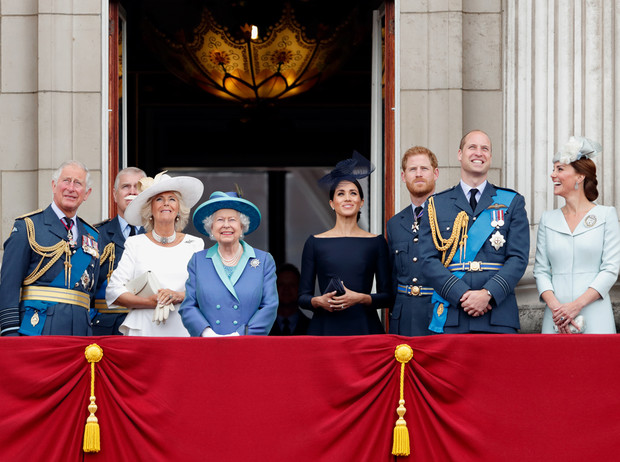
The most famous supporters of homeopathy among modern royal families are British monarchs: Queen Elizabeth II patronizes the Royal London Hospital for Integrative Medicine (formerly the Royal London Homeopathic Hospital), and Prince Charles actively advocates for homeopathy and "complementary medicine".
The royal family's benevolent attitude towards Hahnemann's method traces back to the times when he himself practiced and taught his followers the new medical system. Queen Adelaide (1792-1849), the wife of King William IV, publicly declared her interest in the "new medicine" in 1835 after being cured by a homeopath from an illness that her court physician, an allopath, could not handle.
Since the time of Queen Adelaide, many British monarchs have sought the services of homeopathic doctors. It is known that George V (1865-1936) often turned to homeopathy for treating seasickness. King Edward VIII (1894-1972) always carried packets of homeopathic remedies with him. His brother, King George VI (1895-1952), the father of Queen Elizabeth II, was also known for his particular fondness for homeopathy. He even named one of his racehorses Hypericum in honor of the homeopathic remedy used for injuries. It was he who granted the London Homeopathic Hospital the status of "royal".
The wife of King George VI, known as the Queen Mother and who lived to be 101, particularly supported homeopathic medicine. She said: "I believe that Arnica is the most amazing medicine, and every doctor, even if not trained in homeopathy, should use it."
During her visit to the Royal London Homeopathic Hospital in 2000, Queen Elizabeth II, looking at a portrait of Sir John Weir, the personal homeopath of George VI, remarked: "He did a lot of good for my father."
Today, Queen Elizabeth II's personal homeopath is Dr. Peter Fisher, the medical director of the Royal London Hospital for Integrative Medicine, which changed its name in 2010 to better align with modern trends.
France
There is no reliable information on whether Napoleon Bonaparte sought the services of homeopaths, but it can be confidently stated that his nephew, Napoleon III (1808-1873), the first president of the French Republic, was a supporter of Hahnemann's method.
One of the homeopathic doctors who treated Napoleon III was Dr. Alexandre Chardj, who received an award from the ruler for his contributions in combating the cholera epidemic in 1849. The effectiveness of the homeopathic approach was three times higher compared to traditional treatment methods. Of the 1662 cases he treated, only 41 patients (2.9%) died, while in other hospitals the mortality rate from cholera was no less than 10%.
Napoleon III's wife sought treatment from Clemens Maria Franz von Bönninghausen, whom Hahnemann himself considered one of his best students.
Russian Empire
In pre-revolutionary Russia, homeopathy enjoyed open patronage from the royal family. Homeopath Jean Bijel was the personal physician of Grand Duke Konstantin Pavlovich Romanov and made a significant contribution to the development of homeopathy in the Russian Empire. Emperor Nicholas I also supported homeopathy, and his wife Empress Alexandra Feodorovna even ordered a homeopathic first aid kit with her own emblem from the British manufacturer Ashton&Parsons.
In 1841, a homeopathic hospital was opened in Moscow, and in 1849 - in Nizhny Novgorod. In the following decades, thanks to the patronage of Russian monarchs and the clergy, homeopathy gained immense popularity in the country and was practiced even in its most remote corners.
Daughter of Nicholas I, Olga, who later became the Queen of Württemberg, also experienced the effectiveness of homeopathy personally when she broke her leg while vacationing in Switzerland. The homeopathic treatment of the princess was entrusted to Dr. Alphonse Beck, and it impressed her so much that she invited him to St. Petersburg as her personal physician.
After the assassination of Tsar Alexander II, who supported homeopathy, a homeopathic hospital named after him was opened in St. Petersburg. However, in 1918, shortly after the revolution, it was handed over to official medicine.
Finland
The early history of homeopathy in Finland is directly linked to Russian monarchs, as from 1809 until the October Revolution, the country was part of the Russian Empire. In 1871, the Governor-General of the Grand Duchy of Finland, Nikolai Alderberg, invited the highly respected German homeopath Eduard von Graufoghl to Helsinki, where he was provided with two wards in a military hospital. Graufoghl also ran a successful private practice - patients came to him even from St. Petersburg. For curing the Governor-General of a serious illness, he was awarded the Order of Saint Anna.
Germany
The homeland of Hahnemann provided great support both to him and to his teachings. Hahnemann's nephew, Dr. Vernard Trinius, also a homeopath, became the personal physician of the Princess of Württemberg. King George V of Hanover and his wife Alexandrina Maria sought the services of homeopath Dr. Weber, who was later awarded by the king.
Dr. Gustav Kramer, a respected German homeopath, was the physician of the Grand Duke of Baden.
Dr. Mühlenbein, who treated William VII, Duke of Brunswick, was initially an allopathic physician but later became an advocate of the homeopathic approach. He wrote: "I have worked as a physician for fifty years, 33 of which I practiced allopathy... but I assure you that I thank the Creator every day for giving me enough years of life to confirm the truth of Homeopathy."
For his contributions to medical practice, he was awarded the badge of a Knight of the Guelph Order, an award given by the British crown.
Austria
The history of homeopathy in Austria is interesting in that it was in this country that the new medical system faced the strongest attacks, yet subsequently achieved the greatest flourishing and approval from society.
Emperor Francis I banned the practice of homeopathy in Austria from 1819 to 1835. The German literary genius Johann Wolfgang von Goethe mercilessly criticized the conventional medicine of that time and the attempts of doctors to restrict access to homeopathic treatment. He wrote: "A strange game is being played here - any innovations are rejected and suppressed. For example, no one is allowed to apply Hahnemann's method."
After the death of Francis I in 1835, homeopathy began to flourish in Austria. Several members of the royal family themselves began to practice the homeopathic method of treatment. Princess Wilhelmina Auerberg founded a hospital in Bohemia, where 12 beds were allocated for poor peasants, treated by her homeopathic doctor, Dr. Kogout. In 1846, a homeopathic hospital was also established in Nechanice, where 404 patients were treated in the first three years.
Count de Fickelmont, who served as the Austrian ambassador at the court of the King of the Two Sicilies (part of Italy) and later in Vienna, spoke very favorably about homeopathy in his letter to General Luigi Caraffa: "The system (homeopathy) has passed all tests with the most brilliant success. This explains why its opponents do everything possible to prevent the publication of reports on homeopathic treatment. I have found that since my last visit to Vienna, homeopathy has made great strides forward. In the future, no one will be able to deny the obvious facts. Cured patients are living proof of the need to change perspectives."
Homeopathy continued to spread throughout the empire, and by 1840 it became more popular in Austria than in any other European country. Homeopathic hospitals and pharmacies operated everywhere, and there were almost as many homeopaths as there were official medical doctors. Medical students could choose to study one of the systems.
The popularity of homeopathy in Austria grew even more after the remarkable recovery of Field Marshal Joseph von Radetzky of the Austrian army, who developed a tumor in his right eye socket. Two ophthalmology professors declared the case incurable, and Radetzky turned to homeopath J. Christopher Hartung, one of Hahnemann's early students. Within six weeks, the field marshal was completely cured.
Italy
Homeopathy came to Italy during the Austrian occupation of Naples. At that time, the Austrian army was commanded by Baron Franz Köller, a devoted supporter of Hahnemann. When he first arrived in Naples in 1822, he brought with him his personal homeopathic physician, Georg Necker. Necker lived and practiced in Naples for four years, during which he managed to convince three leading doctors in Italy, Romani, Mauro, and de Horatius, of the effectiveness of the homeopathic approach. In 1824, the Queen of Naples sent Necker to Rome, as her sister, Maria Luisa Bourbon, Queen of Etruria, required treatment.
The three Italian doctors who became Necker's colleagues were known as some of the best homeopaths in Italy. Subsequently, Dr. Romani was invited by Lord Shrewsbury to the United Kingdom as a personal physician, thus becoming the first homeopath in England.
Spain
Spanish monarchs also favored homeopathy. In 1829, King Ferdinand VII of Spain married Doña María Cristina, the daughter of the King of Savoy. The wedding took place in Madrid, and one of the guests was King Ferdinand II of Naples, who was accompanied by his personal homeopathic physician, Dr. Horatius.
Initially, the spread of homeopathy in the country was slow, largely due to the civil war that raged in Spain until 1840.
The Spanish monarchs developed a deep sympathy for homeopathic medicine after meeting Dr. José Núñez, who studied the method under Hahnemann himself. After studying and practicing in France, he returned to Spain, where he continued to work with such remarkable results that he was invited to serve as a physician at the court of Queen Isabella II, who later awarded him the title of Marquis de Núñez.
Homeopathic doctors served the royal family for many years, including after the revolution of 1868, which caused the Spanish monarchs to be in exile for some time.
Prussia
In Prussia, homeopathy also enjoyed the patronage of the ruling circles.
In 1842, King Friedrich Wilhelm IV wrote to his homeopath Dr. Matthias Marenzeller the following: "I am grateful to you for the confidence with which you recommended homeopathic treatment in your letter dated October 14, and I attach great importance to such an important recommendation given by a person who has successfully treated a whole generation with homeopathy. I will gladly continue to provide any assistance that may be required for the development of this system. I have already given permission for the construction of a homeopathic hospital and promised to provide funding from the state treasury, and I intend to allow doctors practicing homeopathy, under certain conditions, to independently distribute homeopathic medicines..."
Historically, due to the active opposition of allopathic doctors and pharmacists, the homeopathic method has not managed to take a leading position in European medicine. However, the following fact is thought-provoking. The ruling monarchs themselves, who had access to any type of treatment, consistently preferred homeopathy, thereby making it the "medicine of kings."
Author: Rudakova E.A.
Literature:
-
Debra Brown "European Royals Treatment by Homeopathy" ( http://authordebrabrown.blogspot.ru/p/royal.html )
-
Dana Ullman "The King's Homeopath?" ( http://www.huffingtonpost.com/…/the-kings-homeopath_b_82749… )
-
Dana Ullman "The Royal Medicine: Monarchs’ Longtime Love for Homeopathy" ( http://englishhistoryauthors.blogspot.ru/…/the-royal-medici… )
Source: medeks.ru
Source: http://Source: medeks.ru