
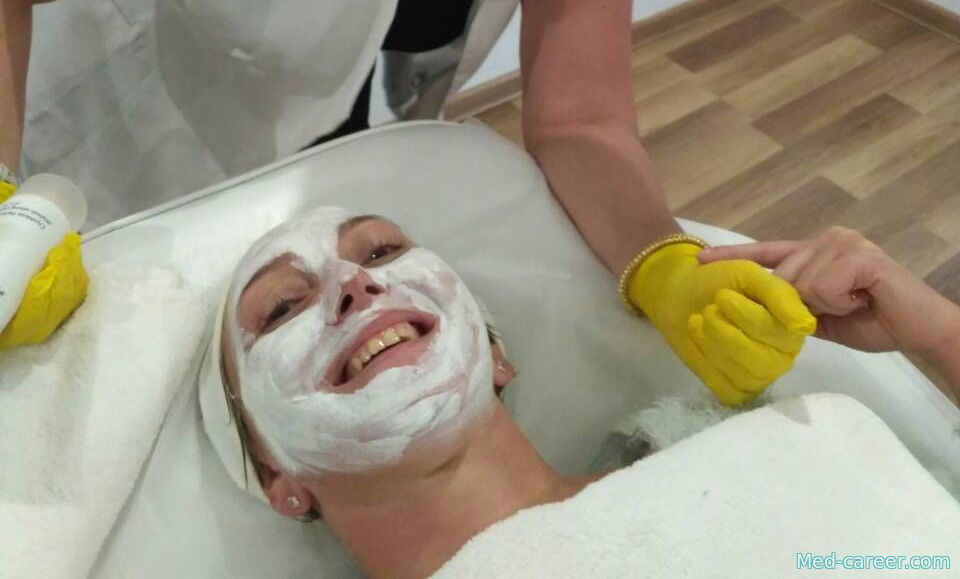
Thanks to modern biologically active substances, cosmetic products can solve many problems: slow down skin aging, effectively moisturize and increase its elasticity, prevent the development of skin diseases, and replenish the deficiency of vital substances.
However, most cosmetic products contain harmful substances for the skin (emulsifiers, fragrances, preservatives).
It is these substances (along with negative environmental factors) that cause premature skin aging, an increase in the number of skin diseases, a rise in allergic reactions to cosmetics, and even cases of complete intolerance. One of our tasks is to choose cosmetics that gently affect the skin, strengthen its own protective structures, and restore its natural health.
The human skin is the largest organ by mass and surface area. Human skin is a reliable barrier that prevents access to microorganisms, toxins, allergens, and foreign substances. The skin retains moisture in the body's tissues.
Surprisingly, almost all barrier properties of the skin are concentrated in its very top layer. The stratum corneum has a unique structure - it consists of keratinized scales that serve as a mechanical barrier (similar to bricks in a wall) and lipid layers that play the same role as cement between the bricks. Thus, a continuous, thin water-lipid emulsion, known as the hydrolipid mantle, forms on the skin's surface.
The base of the cream is often considered an inert carrier, and the actions of active ingredients are described only in product annotations. In fact, it is the active component of any cream! Moreover, an improperly selected base can not only block the action of active components but can even cause destructive effects on the skin's lipid barrier. The lipid layer of the skin is extremely important. When it is destroyed (due to low-quality scrubs, cleansers, and shower gels with surfactants, soap, deodorants, skin polishing, etc.), skin permeability sharply increases, making the skin vulnerable to microbes and toxins, and it rapidly becomes dehydrated, dry, flaky, and irritated. Disruption of the lipid barrier functions underlies diseases such as psoriasis, neurodermatitis, acne, and eczema.
The action of a cosmetic product is determined not only by whether it penetrates the stratum corneum but also by how it interacts with it.
The base of creams is most often an emulsion - a fine dispersion of oil and water. The main types of emulsions are water-in-oil and oil-in-water. In traditional cosmetic emulsions, emulsifiers are used for stabilization - substances that break down the fat layer into separate droplets. The most effective emulsifiers are surfactants (SAs). It is surfactants that are used to dissolve fat when washing dishes. Similarly, the surfactants in cosmetic products interact with the lipid barrier, destroying it! As a result of their action, the skin becomes dehydrated and defenseless against toxic substances. The main requirement for cosmetic emulsions is their compatibility with the skin.
Only the Germans have managed to create lamellar emulsions. These are products without surfactants. Such emulsions create lipid layers similar to those present in the skin. Phospholipids, particularly phosphatidylcholine (lecithin), are the chemical basis of cell membranes in all living organisms! This explains their high compatibility with the skin.
Creams based on lamellar emulsions (dermo-membrane or dermolipid structures) restore the skin's own barrier functions as they are similar in composition and structure to the lipid layers of the stratum corneum.
The base itself is an effective means of restoring the lipid barrier!
Creams containing such a base:
-
are excellently tolerated by all skin types;
-
provide long-lasting protection for the skin;
-
increase the skin's ability to retain moisture, thereby enhancing its elasticity and smoothness;
-
act for 24 hours after application to the skin.
Do not contain what is very toxic to humans:
- surfactants;
-
preservatives;
-
mineral oils;
-
fragrances;
-
colorants;
-
amines;
- silicones.
The choice is ours. Studying the composition of cosmetic products is vital for health!
Synthetic substances do not work on living organisms!
Everything we apply to the skin creates additional intoxication for the liver.
Reckeweg, the founder of homotoxicology, wrote in his works that even a foot product containing formaldehydes, which we (without thinking) give to adolescents during puberty, is so toxic that it can trigger multiple sclerosis with age.
The best in the biological approach to preserving health and beauty belongs to the Germans.
Always prefer professional cosmetics from trusted European brands.