
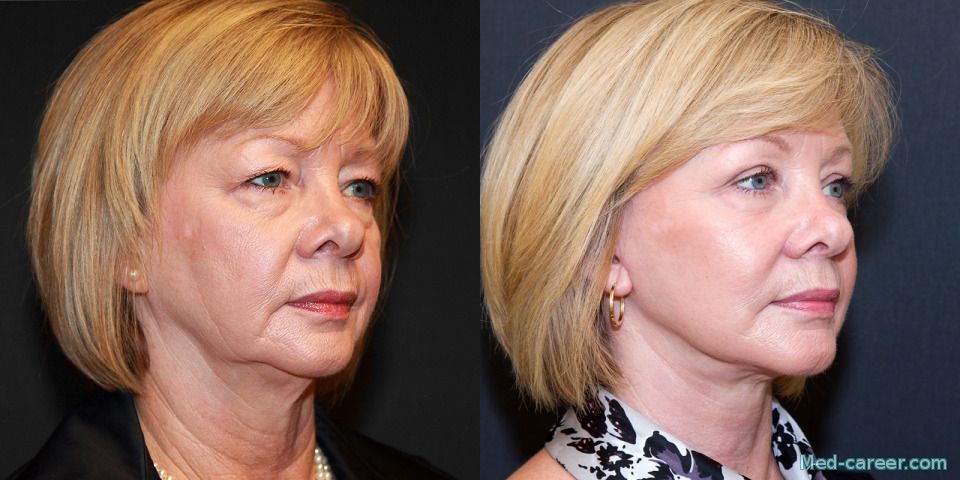
Plasma therapy means injections of platelet-rich plasma obtained from the patient's own blood. It triggers repair processes in the skin: fine lines smooth out, the complexion improves and the skin becomes better hydrated. The treatment is done as a course, and the result depends on both preparation and the individual body — it is not a miracle cure.
What plasma therapy is
Plasma therapy (in cosmetology also plasma lifting or PRP therapy) is an injectable treatment that uses platelet-rich plasma from the patient's own blood. The product is "your own", so there is no rejection reaction. Plasma is used in cosmetology, trichology and dentistry, and for the skin — to slow ageing and help it recover after stress.
Why your own plasma works
Plasma is about 90% water; the rest is biologically active substances: proteins, amino acids, vitamins, minerals, enzymes, hormones, glucose and lipids. Platelets in concentrated plasma start the repair process: fibroblasts produce collagen more actively, and the dermis gradually restores its structure.
Plasma has a neutral pH (7.34–7.43), doesn't cause allergies and combines well with other cosmetic treatments — for example, it helps the skin recover faster after peels.
How the treatment works
About 15 ml of blood is taken and placed in a centrifuge. There the platelet-rich plasma separates from the red blood cells, and the platelet concentration becomes much higher than in the blood. The plasma is then injected into the area that needs repair. A session, including plasma preparation, takes up to 60 minutes.
The main discomfort comes from the injections. On the face, the treatment areas are the face, neck, décolleté and hairline.
Preparing for the treatment
Plasma therapy uses your own blood, so the result also depends on how you prepare. The rules are simple, but it's worth following all of them — from breakfast to sunscreen.
- On the day. Ideally in the first half of the day on an empty stomach; if you can't skip food, have a light, fat-free breakfast. Avoid fatty and fried food the day before.
- Tests. Complete any tests the doctor prescribes before the first session.
- Periods. Don't schedule the treatment for the first 2–3 days of your period.
- Sun. Avoid the sun for two weeks before the course, during it and for the same time after; use sunscreen whatever the season.
- Other treatments. No aggressive cosmetic treatments for a week after a session.
Contraindications
Plasma therapy is not done in case of blood disorders, acute infectious diseases, pregnancy and breastfeeding, severe kidney disease, coronary heart disease or stage 3 hypertension. This list is not complete: the doctor makes the final assessment at the consultation, so tell them about chronic conditions and medication in advance.
Course and results: what to really expect
Plasma injections are done as a course; the number of sessions and the interval between them are decided by the cosmetologist at the consultation, after an examination. First changes show during the course, and the final result after it ends. Whether a maintenance course is needed later is also up to the doctor.
It is one of the least radical anti-age treatments, but not a magic one. Every body is different: a person with thin hair won't get a thick mane after plasma therapy, and scarred skin won't become perfectly smooth.
Plasma therapy, biorevitalization or mesotherapy
All three are injectable treatments that work on skin quality, but they inject different things. The choice depends on the goal and the ageing type: Larysa Lonchar includes plasma therapy among treatments for the "tired" ageing type, when soft tissues lose tone and the corners of the mouth droop.
| Plasma therapy | Biorevitalization | Mesotherapy (homeomesotherapy) | |
|---|---|---|---|
| What is injected | your own platelet-rich plasma | low-concentration hyaluronic acid products | "cocktails": vitamins, amino acids, trace elements, plant components |
| Main goal | trigger the skin's own repair | hydration, smoothness, fine lines | nourishing the skin for a specific concern |
| Session time | up to 60 min | 30–60 min | from 60 min |
| Price (as of October 2026) | from 2,150 UAH | from 5,650 UAH | from 1,200 UAH |
Prices and options are on the plasma lifting page (face, neck, décolleté and hairline, 4 tubes — 4,750 UAH), and on the biorevitalization and mesotherapy pages. A consultation with cosmetologist Larysa Lonchar will help you choose.
For aesthetic doctors — the master class "Plasma Therapy: Conscious Understanding and Application of the Method" (5 hours, theory and practice).
First published on the Biotonika blog on 19.08.2015. Updated 09.10.2026.
Questions and answers
What is plasma therapy?
It is an injectable treatment that uses platelet-rich plasma (PRP) obtained from the patient's own blood. In cosmetology it is also called plasma lifting.
How many plasma therapy sessions do you need?
The number of sessions in a course and the interval between them are decided by the cosmetologist at the consultation, after an examination. Whether a maintenance course is needed later is also up to the doctor.
Does plasma therapy hurt?
Discomfort comes mainly from the injections. How much depends on the area and your sensitivity — discuss it with the doctor before the treatment.
How should you prepare for plasma therapy?
Come in the first half of the day on an empty stomach or after a light, fat-free breakfast, avoid fatty and fried food the day before, don't schedule it for the first 2–3 days of your period, and avoid the sun for two weeks before the course.
Who should not have plasma therapy?
Contraindications include blood disorders, acute infections, pregnancy and breastfeeding, severe kidney disease, coronary heart disease and stage 3 hypertension. The doctor makes the final assessment.
How is plasma therapy different from biorevitalization?
Plasma therapy uses the patient's own plasma, biorevitalization uses low-concentration hyaluronic acid products. Which one is appropriate depends on the goal and your skin ageing type.