
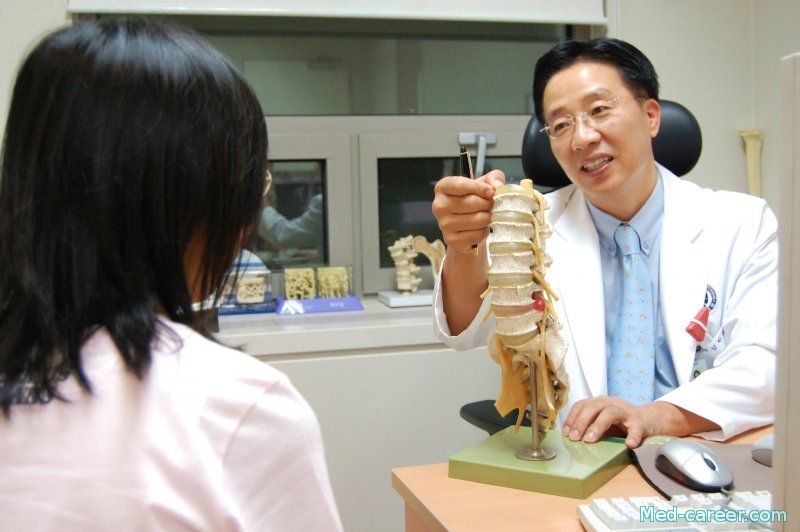
Traditional Eastern Korean Medicine
“A person falls ill for many reasons: some get sick from a cold, some from fatigue and sorrow.
If one of a hundred gates is closed, can we really say that a thief cannot break into the house?”
Confucius
Nowadays, more and more people are showing interest in Eastern medicine. Many people are trying to understand how various methods of reflexotherapy (acupuncture, vacuum therapy, heating and cauterization, massage, etc.) can treat serious diseases, chronic, lingering illnesses, and eliminate acute pain syndromes.
Scientists have revealed interesting statistics: in 2001, there were 627 million visits to Eastern medicine centers in the USA, while only 386 million visits were made to family doctors. People with higher education, i.e., those who can analyze and think before choosing a treatment method, mainly turned to Eastern medicine doctors.
So why do people increasingly prefer Eastern medicine? The reason is quite simple: it is safe, effective, and does not require large financial expenditures. Of course, if a person is in an accident or suffers from a severe progressive illness, they simply cannot do without traditional Western medicine. However, as a rule, more successful treatment occurs with a skillful combination and proper application of Western and Eastern medicine methods, using what is called integrated medicine.
The phenomenon of Eastern medicine lies in the fact that the main task of a traditional medicine doctor is to strengthen the health of the healthy, increase the health reserve of the sick, and treat ill people.
There are two main philosophies of health. One is Western, which is based on the Socratic thesis: “Man, know thyself,” while the other philosophy is Eastern (the Confucian thesis): “Man, create thyself.”
Traditional Eastern medicine views illness as a process that arises from the disruption of normal interactions, both within the body and between the human body and nature.
Illness does not arise suddenly; it accumulates over long months and years.
Treatment of diseases is primarily based on diagnosis and differentiation of syndromes. The main focus is on correcting pathological changes through the restructuring of organ functions. The assessment of syndromes includes not only the causes, mechanisms, location, and nature of the disease but also the confrontation between the pathogenic factor and the body's resistance.
Eastern doctors identify the main groups of causes of diseases:
internal causes (or “seven emotions”): excessive joy, sorrow, anger, fear, melancholy, love, and desire;
external (or “six excesses”: wind, cold, heat, dampness, dryness, fire);
neutral (those that influence from the outside: malnutrition, poisoning, bruises, etc.);
Eastern diagnosis relies on four main methods.
Inspection. The doctor, relying on their knowledge, intuition, and insight, conducts an external examination, paying attention to the condition of the patient's face, tongue, and eyes.
Hearing and smelling. It is believed that the voice and body odor are significant individual characteristics that carry important information about the patient's health.
Interrogation. The doctor listens to the patient's complaints and asks questions to clarify the symptoms of the disease.
Palpation – primarily the pulse. This method can sometimes help diagnose the disease instantly.
Based on the diagnosis, the doctor prescribes treatment methods that affect active biological points (there are about 2000 on the human body). If the imbalance in the body is significant, treatment may take longer than usual.
Of course, you have the right to decide which path to take. The main principle of both medical schools is the principle: “Do no harm!” Health as life is a personal wealth, and how to manage it depends on the desires, knowledge, and skills of the individual.
No doctor can make a person healthy if the person does not decide to take an active part in it.