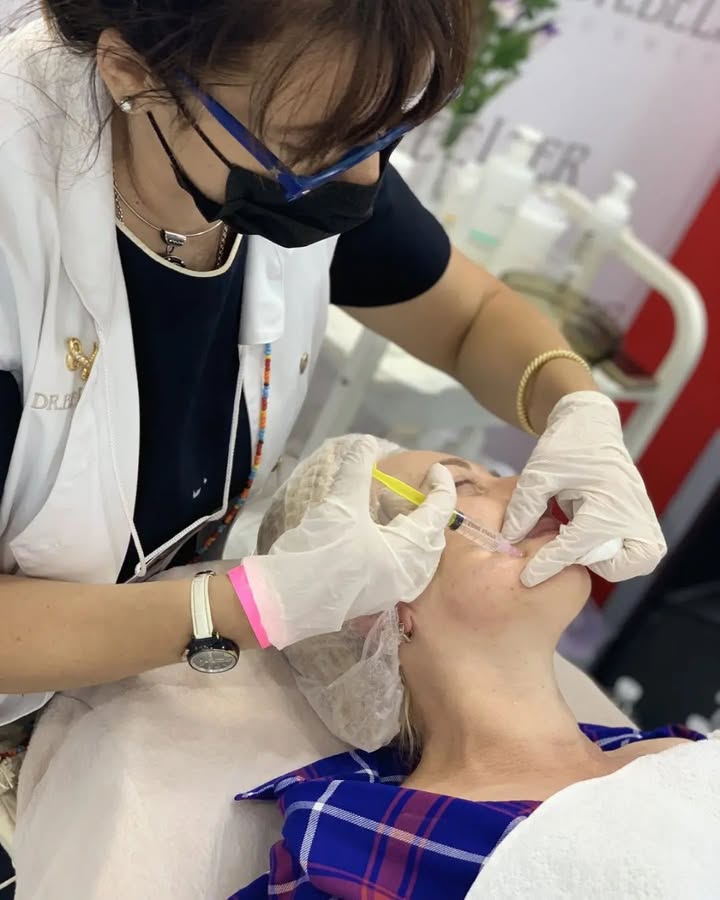
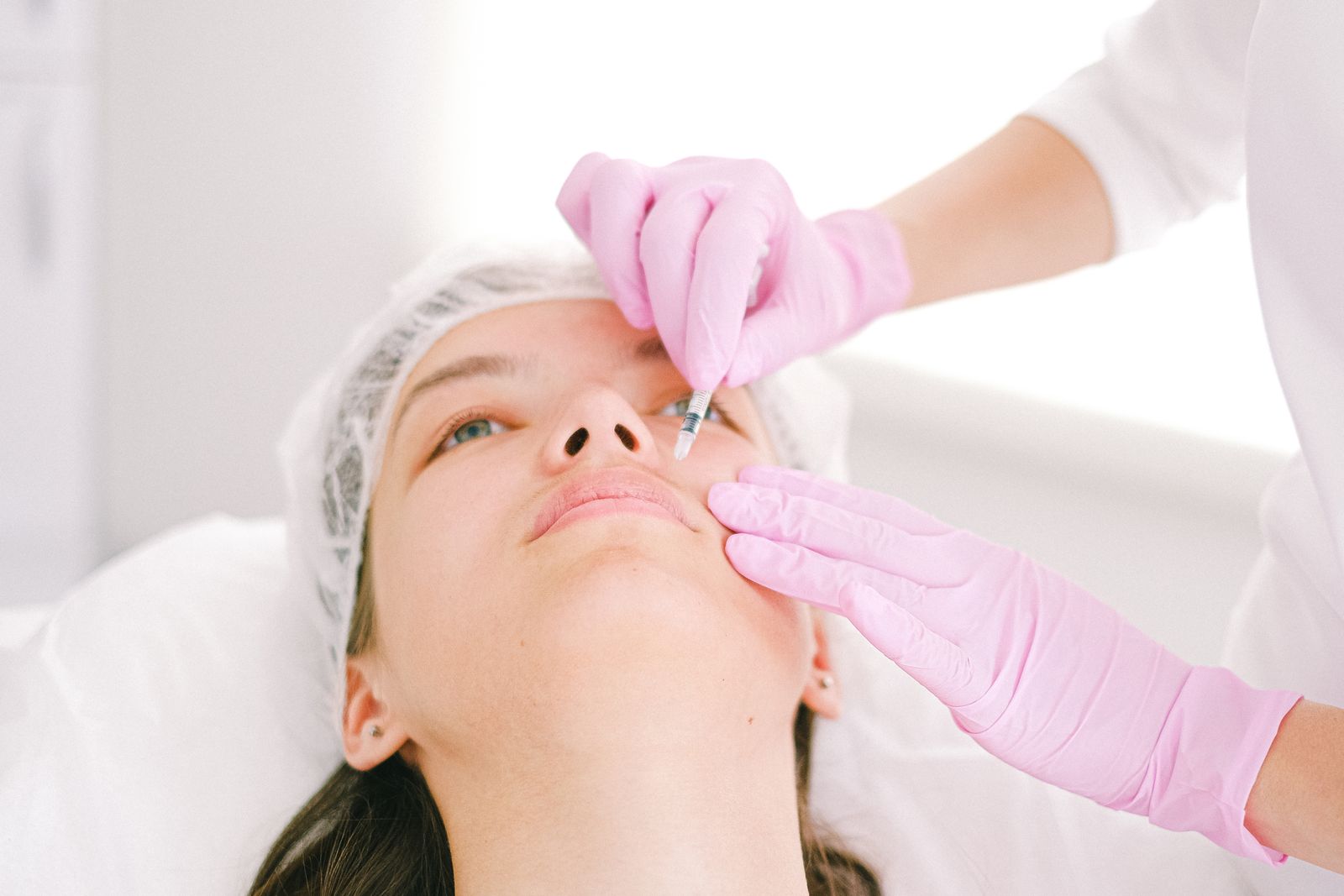
Biorevitalization and mesotherapy are often confused: both are injection procedures, both are done as a course, and both may involve hyaluronic acid. But their goal, the composition of the products and the logic of the course are different. Here is what sets them apart, who each one suits, and how a cosmetic doctor chooses between them.
Biorevitalization vs mesotherapy: the short answer
Biorevitalization means injections of hyaluronic acid-based products whose main job is to hydrate the skin deeply and improve its quality. Mesotherapy is a broader method: a cocktail of vitamins, amino acids, trace elements, plant components or homeopathic preparations is made up for a specific concern — tone, pores, pigmentation, acne or hair.
Put simply, biorevitalization answers "my skin lacks moisture", while mesotherapy answers "my skin needs targeted support". The line between them is not rigid. When hydration is the patient's main need, the doctor may also choose mesotherapy with a single-component product — hyaluronic acid. At Biotonika the two procedures often go into one programme because they complement each other.
What biorevitalization is
Biorevitalization is a procedure in which a hyaluronic acid-based product is injected into the middle layers of the skin. Neither creams nor serums penetrate that deep, which makes it one of the fastest ways to hydrate and replenish the skin. It needs no complicated preparation, and the doctor uses local anaesthesia when necessary.
At Biotonika, biorevitalization is performed by cosmetic doctor Larysa Lonchar using Belotero Soft, Neauvia Hydro and Rejuran I. The product is chosen to suit the skin, not the other way round, and it determines the price of the procedure.
What makes the school's approach distinctive is that biorevitalization is not a single injection but part of biological rejuvenation. When needed, Heel or GUNA preparations selected for the individual are added to the session. The work has three stages: drainage of the cells and intercellular space, restoring cell function, and metabolic support of the cells.
Hyaluronic acid products are naturally absorbed over time, so the effect is limited. To maintain the skin, a course of 3 to 5 sessions once or twice a month is usually recommended. More on the Biorevitalization page.
What mesotherapy and homeomesotherapy are
Mesotherapy means injections of special cocktails whose composition the doctor selects for each case. They may include amino acids and polysaccharides, hyaluronic acid, vitamins and trace elements, plant components, enzymes and nucleotides. Needles of different lengths deliver the product precisely to the skin layer where it is needed.
Homeomesotherapy uses homeopathic preparations, injected shallowly under the skin. The method has a general draining effect: it helps with puffiness and improves circulation. In her practice Larysa Lonchar always combines homeomesotherapy with mesotherapy cocktails or biorevitalization products — the effect is more pronounced and lasts longer.
Mesotherapy smooths wrinkles, gives a lifting effect, stimulates metabolic processes in the skin and protects it from harmful external factors. Outwardly this shows as firmer, more elastic skin and a more even complexion — Larysa Lonchar writes about it in Facial Mesotherapy: What Are the Benefits?.
Another area is hair: mesotherapy is used to nourish and restore hair, including when it is falling out. The skin improves after the first session, and the full effect is assessed at the end of the course. A session lasts from 60 minutes; more on the Mesotherapy (homeomesotherapy) page.
Comparison: biorevitalization and mesotherapy
The main differences lie in the product and the goal. Biorevitalization works first of all with hydration and skin quality; mesotherapy with a wider range of concerns, because the cocktail is built around the problem. Below is a comparison based on Biotonika's procedure pages. Prices are as of October 2026; current ones are on the procedure pages.
| Biorevitalization | Mesotherapy (homeomesotherapy) | |
|---|---|---|
| Product base | hyaluronic acid (Belotero Soft, Neauvia Hydro), plus Rejuran I | a cocktail for the task: vitamins, amino acids, trace elements, plant components, hyaluronic acid; homeopathic preparations in homeomesotherapy |
| Main goal | deep hydration, skin quality | tone, firmness, pores, pigmentation, acne, hair, puffiness |
| Session length | 30 min (30 to 60 min on the procedure page) | from 60 min |
| Course | 3–5 sessions, once or twice a month | the doctor sets the number of sessions |
| Hair | — | used for hair loss and to nourish hair |
| Price at Biotonika | 5,650–6,300 UAH depending on the product | from 1,200 UAH |
There is also a third option — fractional mesotherapy with the Dr. Pen device, where the same mesotherapy products are delivered through micro-punctures. At Biotonika it is done as part of comprehensive facial care.
Who biorevitalization suits
Biorevitalization is chosen when the skin is "tired" from a lack of moisture and the first signs of ageing: tightness and flaking, uneven tone, fine lines, loss of firmness. It is especially relevant for the fine-wrinkle ageing type, when the skin is dehydrated, thin and has lost turgor — it needs intensive hydration.
It is important to tell dry skin from dehydrated skin. Dehydration is a temporary state anyone can face regardless of skin type: the top layer simply lacks water, and a few minutes after applying cream the tightness is back. Dry skin is a genetically determined type that lacks lipids, and a cosmetologist treats it differently.
Biorevitalization is most in demand at two times: in hot weather, when the skin loses moisture fast, and at the end of summer, after sun and sea. It is also used to prepare the skin for a peel. It can be combined with peels, contouring, botulinum therapy and photorejuvenation; the doctor decides the sequence.
Who mesotherapy suits
Mesotherapy is considered when you are unhappy with your complexion, skin tone or wrinkles, or notice the first pigment spots. In Larysa Lonchar's "procedure cheat sheet", mesotherapy is among the procedures for enlarged pores, pigmentation, dark circles under the eyes, acne and hair loss. The final programme is drawn up by the doctor.
Some typical situations in which a doctor may suggest mesotherapy:
- the deformation ageing type — double chin, heavy eyelids, bags under the eyes: together with massage and device-based methods, bio- and mesotherapy support skin tone;
- enlarged pores and a tendency to acne — the cocktail is chosen for problem skin;
- puffiness — homeomesotherapy has a draining effect;
- hair loss — mesotherapy and plasma therapy;
- after summer — for the skin, while hair mesotherapy helps after strong sun and salt water.
These are general guidelines. In cosmetology, as in medicine, there are no universal procedures or schemes: every skin type and state of health needs its own programme.
How the doctor chooses, and can they be combined
The choice between biorevitalization and mesotherapy is made at a consultation, not by the name of the procedure. The doctor assesses your skin type, ageing type, dehydration and blood vessels, and asks about your health, habits, previous procedures and home care. That determines the product, the number of sessions and the combination with other methods.
Combining is common practice. Biorevitalization and homeomesotherapy can prepare the skin for a peel, and a superficial peel and mesotherapy can be done in one session. Larysa Lonchar always combines homeomesotherapy with mesotherapy cocktails or biorevitalization products.
What to tell the doctor at the consultation:
- What exactly bothers you: dryness and tightness, tone, pores, wrinkles, hair.
- Which procedures you have had and how your skin reacted.
- Any chronic conditions, allergies or medication, and whether you are planning a pregnancy.
- When you plan the procedure relative to your cycle and important events.
You can book a consultation with cosmetologist Larysa Lonchar: the doctor will choose the procedure and number of sessions and give you an idea of the total cost.
What to expect from the result
After biorevitalization the main change is deeper hydration: the skin becomes softer, firmer and smoother to the touch and looks fresher, with fine lines less visible. After mesotherapy the skin improves after the first session, and the pronounced revitalising and lifting effect is assessed once the course is complete.
The difference in expectations comes from the nature of the products. Hyaluronic acid gives a noticeable hydrating effect fairly quickly but is absorbed over time, which is why biorevitalization is repeated as a course and maintained. A mesotherapy cocktail works gradually and in several directions at once: it restores hydration, nourishes the cells of the epidermis and dermis and activates metabolic processes.
How visible the result is for pigmentation, pores or post-acne marks depends on the initial state of the skin and on which procedures it is combined with. Home care between sessions matters too: products chosen for your skin type, enough water and sun protection. That is why the doctor draws up the plan — product, number of sessions, intervals — individually.
Contraindications and planning your session
Biorevitalization is not performed, or is postponed, during pregnancy and breastfeeding, with cancer, autoimmune or blood disorders, epilepsy, decompensated diabetes, acute inflammation with fever, rashes in the injection area, allergy to the product's components, or a tendency to keloid scars. For mesotherapy the doctor clarifies the list at the consultation.
About your period: it is not a medical contraindication, but at that time injections feel more painful, anaesthetic creams work less well, and reduced blood clotting raises the risk of bruising, which also takes longer to fade. Before menstruation the body retains water, so swelling after hyaluronic acid may be stronger. Tell your doctor and, if possible, avoid the first 2–3 days.
Injection procedures are cosmetic, not a treatment for disease. The result depends on the initial state of the skin, age, home care and combination with other procedures, so the doctor does not promise the same effect to everyone.
Questions and answers
Which is better: biorevitalization or mesotherapy?
The better procedure is the one that matches what your skin needs. Biorevitalization is chosen mainly for deep hydration and skin quality; mesotherapy when a broader cocktail effect is needed — tone, pores, pigmentation, acne, hair. A doctor often combines both in one programme.
How is biorevitalization different from mesotherapy?
Biorevitalization is based on hyaluronic acid products and aims to hydrate the skin from within. A mesotherapy cocktail may contain vitamins, amino acids, trace elements, plant components and hyaluronic acid, and homeomesotherapy uses homeopathic preparations; the composition is chosen for a specific concern.
How many biorevitalization sessions are needed?
To maintain the skin, a course of 3 to 5 sessions, once or twice a month, is usually recommended, depending on the product and the condition of the skin. The doctor sets the exact plan at the consultation.
How much do biorevitalization and mesotherapy cost at Biotonika?
As of October 2026, biorevitalization costs 5,650 to 6,300 UAH depending on the product (Rejuran I, Neauvia Hydro, Belotero Soft), and mesotherapy (homeomesotherapy) starts at 1,200 UAH. Current prices are on the procedure pages.
How long does the procedure take?
Biorevitalization is listed as 30 minutes in Biotonika's price list; with preparation, the procedure page gives 30 to 60 minutes. Mesotherapy takes from 60 minutes.
Can I have injections during my period?
It is not a medical contraindication, but injections feel more painful at that time, bruises appear more easily and take longer to fade, and swelling after hyaluronic acid can be stronger. Tell your doctor and, if possible, avoid the first 2–3 days.
Can biorevitalization and mesotherapy be combined?
Yes. In her practice Larysa Lonchar always combines homeomesotherapy with mesotherapy cocktails or biorevitalization products — the effect of this combination is more pronounced and lasts longer. The doctor decides the order of procedures.