
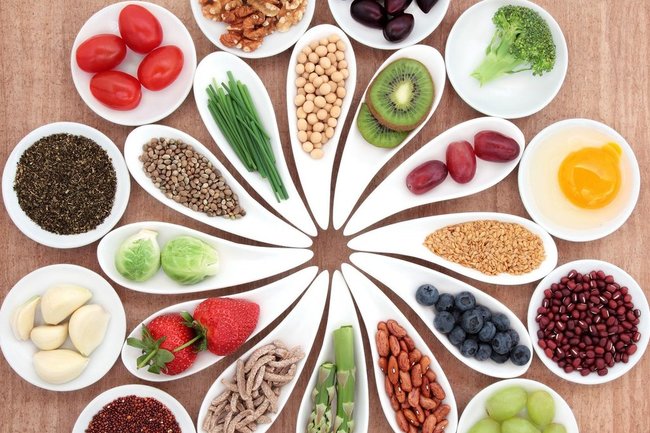
The Diet That Will Help Defeat Cancer
Budwig noted that the consumption of low-fat and processed oils/fats leads to serious diseases. And since all food is now artificially defatted, it poses a threat to both children and adults.
Dr. Budwig spent several years deeply studying the blood of cancer patients. As a result of her research, she found that patients always had a reduced level of phospholipids and lipoproteins in their blood.
Additionally, along with the reduced hemoglobin levels in the blood, she discovered unusual yellow-green inclusions. Another finding was that in healthy individuals, the level of Omega-3 fatty acids was much higher than in patients.
Based on her research results, she began to experimentally develop a diet for treating the disease. Ultimately, she settled on a mixture of cottage cheese and organic flaxseed oil.
Flaxseed oil, more than others, contains Omega-3 fatty acids, is easily absorbed, and does not cause allergies. Cottage cheese, on the other hand, contains a high level of sulfoproteins.
Budwig discovered that this combination of cottage cheese and flaxseed oil makes the oil water-soluble, i.e., easier for the body to absorb. Consuming only flaxseed oil is harmless but useless. The oil must be mixed with cottage cheese.
To her amazement, Budwig found that after just three months of following her diet, cancer patients showed improvement. Tumors shrank, patients regained strength, and there were no longer yellow-green particles in the blood. The levels of phospholipids and lipoproteins returned to normal, and hemoglobin levels normalized.
She was able to save even patients whom doctors had given up on. After many trials, she found the optimal composition – two tablespoons of organic (cold-pressed) flaxseed oil mixed thoroughly with 100-150g of cottage cheese to a homogeneous mass, once a day.
In 1990, oncologist Dr. Roehm stated that this diet is the most successful anti-cancer diet in the world. The use of the "Budwig Protocol," as it was later called, proved its therapeutic value in the prevention and treatment of cancer, myocardial infarction, atherosclerosis, liver dysfunction, treatment of peptic ulcers, arthritis, skin eczema, age-related degenerative diseases, and autoimmune diseases.
Budwig revealed the harmfulness of using "bad" fats for health, particularly the widely used methods of hydrogenation (for example, the production of margarine, a very dangerous product for people with cancer risks).
Throughout her life, Budwig's scientific views and ideas were attacked and then subjected to a coordinated silence by official medicine, which had mutual interests with the pharmaceutical and food industries.
As Cliff Bequit, a former patient of Budwig who was under her supervision for prostate cancer for 10 years, recalled, about 1000 successful cancer recovery stories were documented. However, the pharmaceutical and oncology industries ignored all of Budwig's achievements. Moreover, her scientific findings could seriously undermine the food industry in the area of fat production.
Budwig considered the use of any refined types of oils, so-called artificial fats (margarine, mayonnaise), obtained through hydrogenation or partial hydrogenation, unacceptable.
All these fats are rejected by the body, particularly by the heart muscle, leading to various disorders, including at the cellular level. Among the bad fats, Budwig included unsaturated fats commonly used in baking.
In her view, hydrocarbons containing natural sugars were acceptable for consumption: apples, figs, pears, grapes.
The consumption of refined sugar in all forms, pasta, white bread, fatty meats, fried and canned products is not allowed.
Practically everyone was recommended to consume at least 100 grams of cottage cheese with 5 grams of flaxseed oil daily to maintain normal health.
According to Budwig's diet, breakfast could include honey blended with organic cold-pressed flaxseed oil (such oil should only be stored in the refrigerator), a small amount of fresh raw milk (a scarce product in modern urban environments), and fresh grainy cottage cheese. The addition of nuts (except peanuts) and a small amount of fresh seasonal fruits was allowed.
It should be noted that Joanna Budwig used a mixture consisting of 42 grams of flaxseed oil (3 tablespoons) per 100 grams of fresh cottage cheese in cases of severe illnesses.
In regular daily practice, a smaller amount of flaxseed oil is used with a larger amount of cottage cheese as a preventive measure.
Source: https://www.segodnya.ua/lifestyle/food_wellness/dieta-kotoraya-pomozhet-pobedit-rak-702413.html