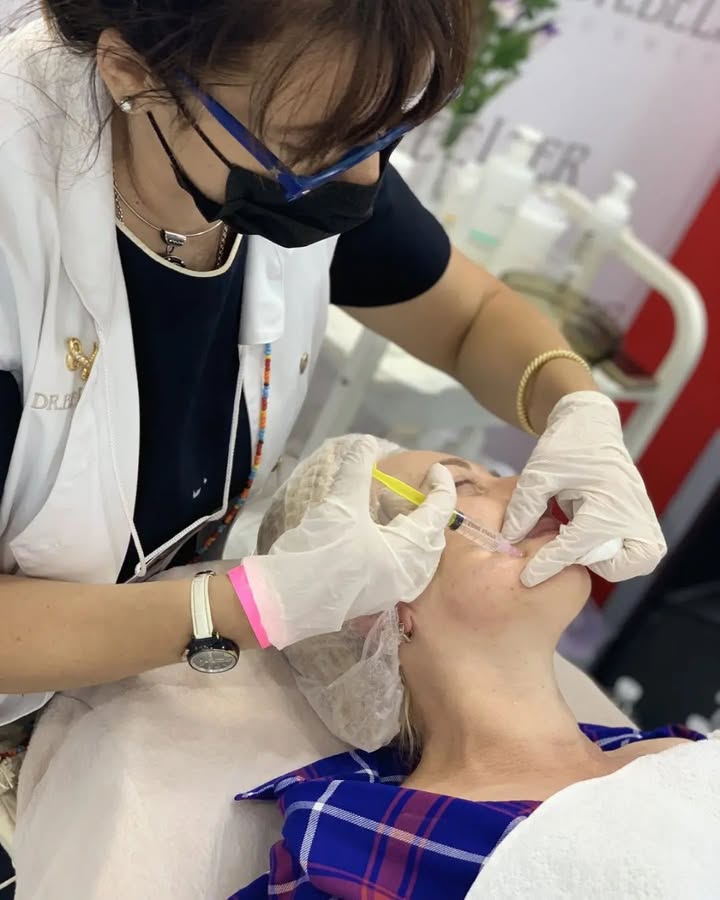

Red threads on the cheeks and the sides of the nose, a face that "burns" after the cold or a hot shower: this is what couperose usually looks like. Here we look at where it comes from, what care this skin needs, and which treatments are fine with couperose and which are better avoided so as not to do harm.
What couperose is
Couperose (often called broken capillaries) is a skin condition in which dilated small blood vessels become visible on the face: red threads, "spider veins" and persistent redness, most often on the cheeks and the sides of the nose. It is a condition, not a skin type. Type is set by genetics; condition can be changed with well-chosen skincare and treatments.
Skin with couperose is usually sensitive: it reacts with redness to cold, wind, heat and harsh products. The threads themselves don't hurt, but they often come with a feeling of tightness, dryness or burning after washing, and it is this reactivity that tells you the skin needs different care. In her materials, Larysa Lonchar distinguishes between skin "type" and skin "condition": dryness, flaking, couperose and sensitivity are conditions, and they can be worked on. Read more in the article "Can you change your skin type?".
Couperose should not be confused with redness that comes with breakouts, burning or eye irritation. That is a reason to see a dermatologist: cosmetic procedures are carried out once a doctor has ruled out disease.
Why couperose appears
Couperose develops when the skin's blood vessels lose their tone and stay dilated, while the skin's protective barrier weakens. Triggers include stress, physical and psychological strain, a poor environment, an unbalanced diet, chronic illness and the wrong skincare. Skin of any type can become sensitive, whether it is oily or dry.
Larysa Lonchar has spoken about sensitive skin at her seminars for cosmetologists: increased skin reactivity results from a damaged protective barrier and an imbalance in the skin's functions. When the barrier is weakened, the skin's own defences work less well, and it responds with redness to the slightest irritation.
What makes couperose worse in everyday life:
- Harsh cleansing. Products with aggressive formulas dry out and irritate the skin.
- Temperature changes. Frost, wind, hot showers and saunas dilate blood vessels.
- Self-prescribing. Strong peels, scrubs and active products "recommended by a blogger".
- The same routine all year round. Your face doesn't change, but the weather does, and your skincare should change with it.
In the bioregulatory approach that Larysa Lonchar follows, couperose, like any "external" problem, is a reason to look at the state of the body as a whole, not just at the cheeks.
Home care for couperose
The key principle of caring for skin with couperose is gentleness: mild cleansing without harsh products, hydration and restoring the protective barrier, plus protection from the sun and cold. From autumn to spring, skin with couperose needs especially gentle care, and only with professional products chosen by a cosmetologist with the season in mind.
What helps at home:
- Gentle cleansing. No harsh gels or scrubs; use warm, not hot, water.
- Products for sensitive skin. For example, the Dr.Belter Sensi-bel line is designed for hypersensitive skin and skin with couperose: a light day fluid moisturises and protects throughout the day, while a rich night fluid nourishes the skin with oils and restores its balance.
- Protection from sun and cold. UV light, frost and wind all put stress on blood vessels.
- Seasonal product changes. In autumn and winter your skin needs different care than in summer.
- No self-prescribing. Active acids, retinol and peels only on a cosmetologist's recommendation.
One ingredient used in cosmetology to strengthen capillaries is Centella asiatica extract. It is used both in mesotherapy and in skincare products. But the specific product for your skin is best chosen together with a cosmetologist.
Which treatments are allowed and which are not
With couperose, treatments with an intense effect on blood vessels are contraindicated: classic facial massage and chiromassage. Gentle methods are possible instead: a dedicated peel for treating couperose, mesotherapy at an early stage, plasma therapy and gentle cleansing. Which treatment to choose, and whether it is right for you, is decided by a cosmetic doctor after an examination.
Prices below are as of October 2026; "from" means the lowest price. Current prices are on the procedure pages.
| Treatment | With couperose | Duration | Price |
|---|---|---|---|
| Classic facial massage | contraindicated | 30 min | — |
| Spanish chiromassage | contraindicated | — | — |
| Peel for treating acne, post-acne marks and couperose | allowed, the doctor chooses the product | ≈ 30 min | from 1300 UAH |
| Mesotherapy (homeomesotherapy) | indicated at an early stage | ≈ 60 min | from 1200 UAH |
| Plasma therapy | couperose among the indications | ≈ 60 min | 4750 UAH (face, neck, décolleté) |
| Facial care with cleansing | type of cleansing chosen carefully | 90 min | 1700 / 2500 UAH |
Massage. The pages for classic facial massage and chiromassage list couperose explicitly among the contraindications. There are other, gentle techniques for skin with couperose: Dr.Belter anti-couperose care combines elements of manual lymphatic drainage massage with Dr. Søbye-Massage, a pressure-point technique.
Peel. Biotonika's treatment room offers a dedicated peel for treating acne, post-acne marks and couperose. Couperose is among the indications for the peel, but the doctor chooses the product and its strength: a harsh peel picked on your own can make redness worse.
Mesotherapy. The "Mesotherapy (homeomesotherapy)" page lists early-stage couperose among the problems the method addresses: the cocktail targets microcirculation and vessel walls. The composition of the cocktail is chosen individually.
Facial cleansing. Choosing the type of cleansing for acne, couperose and demodicosis is a separate topic that Larysa Lonchar has covered at seminars for cosmetologists. At Biotonika, only heavily congested areas are cleansed manually, and an ultrasonic scrubber finishes the rest, so the skin is less traumatised.
Couperose and the seasons
Skin with couperose suffers most from autumn to spring: cold, wind, dry air in heated rooms and the temperature swings between outdoors and indoors keep forcing the vessels to constrict and then dilate. That is why skincare is reviewed in autumn: fewer active products, more protection and barrier repair, and professional cosmetics only.
Larysa Lonchar calls the habit of using the same products all year round a big mistake. Your face doesn't change, but the weather does, and after summer UV exposure the skin needs something different from what it needed in spring. For skin with couperose this matters even more: a product that felt comfortable in summer may not protect against the cold in winter.
What to change in the cold season:
- Before going out into the frost, use a protective cream rather than a light gel, and apply it well in advance, not right at the door.
- Cleansing should be even gentler than in summer, with no drying products.
- Night care should be richer, with oils, to restore the skin's balance.
- Treatments: peels are traditionally done in autumn, but with couperose only a cosmetologist chooses the product and the schedule.
Couperose is a topic not only for clients but for cosmetologists themselves. On Biotonika's basic and hardware cosmetology course, couperose is covered in the theory block among aesthetic imperfections, alongside pigmentation, puffiness, scars and wrinkles, so that future specialists can recognise it and avoid prescribing a procedure that would do harm.
Cosmetologist or dermatologist
A cosmetologist works with couperose as an aesthetic problem, choosing skincare and treatments. But if the redness is persistent, comes with breakouts, burning or eye irritation, or is getting worse quickly, see a dermatologist first. The best results come from a cosmetologist and a dermatologist working together where possible, each within their own area.
Larysa Lonchar spoke about this back at her 2017 seminars: harmonious cooperation between a cosmetologist and a dermatologist helps achieve successful results when working with problem skin. A cosmetologist does not diagnose or treat diseases; their job is to choose safe treatments and skincare once a doctor has ruled out illness.
At the consultation, the cosmetologist will also check for contraindications to procedures: chronic illness, high blood pressure, recent injections or pregnancy. The more information you give, the safer the plan will be. Bring a list of the products you use at home and think about what makes the redness worse: a shower, exercise, spicy food or a particular cream. This helps identify the triggers and remove them before any treatments.
Where to start
Start with a consultation: the cosmetologist will assess your skin, find out what triggers the redness, review your home routine and suggest treatments that won't do harm. The consultation is free if you go on to have a procedure, and if you can't come in, you can book an online consultation and have your skincare chosen remotely.
At a consultation with Larysa Lonchar, you get a treatment programme and home-care products chosen for the season. To book, call +38 067 780 22 13 or message on Viber at the same number. Biotonika's treatment room is in Kyiv, at 32/17 Vasylia Tiutiunnyka St.
Questions and answers
What is couperose?
Couperose is a skin condition in which dilated small blood vessels become visible on the face, most often on the cheeks and the sides of the nose, as red threads and "spider veins". It is not a skin type but a condition, so it can be addressed with skincare and treatments chosen by a cosmetologist.
Can couperose be cured with skincare?
No one can promise that thread veins will disappear completely. Proper gentle skincare and treatments chosen by a doctor help reduce redness and make the skin less reactive. How visible the result is depends on the stage and the condition of your skin.
Can I have a facial massage if I have couperose?
Classic facial massage and chiromassage are contraindicated for couperose. There are gentler techniques for skin with couperose, such as anti-couperose care with elements of manual lymphatic drainage. What is right for you is decided by the cosmetologist.
Can I have a facial cleansing if I have couperose?
The type of cleansing is chosen with particular care when you have couperose. At Biotonika, only heavily congested areas are cleansed manually, and an ultrasonic scrubber finishes the rest, which is less traumatic. The cosmetologist decides after an examination.
Which treatments help with couperose?
Biotonika's treatment room offers a dedicated peel for treating acne, post-acne marks and couperose; early-stage couperose is also among the indications for mesotherapy and plasma therapy. The programme is drawn up by a cosmetic doctor.
How should I care for skin with couperose in winter?
From autumn to spring, skin with couperose needs very gentle care and professional products only. For this kind of skin there is, for example, the Dr.Belter Sensi-bel line: a day fluid and a night fluid for hypersensitive skin.
When should I see a dermatologist about redness?
If the redness doesn't go away, or you notice breakouts, burning or eye irritation, see a dermatologist first. In such cases the cosmetologist and the dermatologist work together.