Pigmentation spots are one of the most common reasons people see a cosmetologist, especially in autumn. Here we look at where they come from, which treatments a cosmetologist combines to lighten them, what this costs at Biotonika and what to do at home to avoid new spots.
What pigmentation spots are
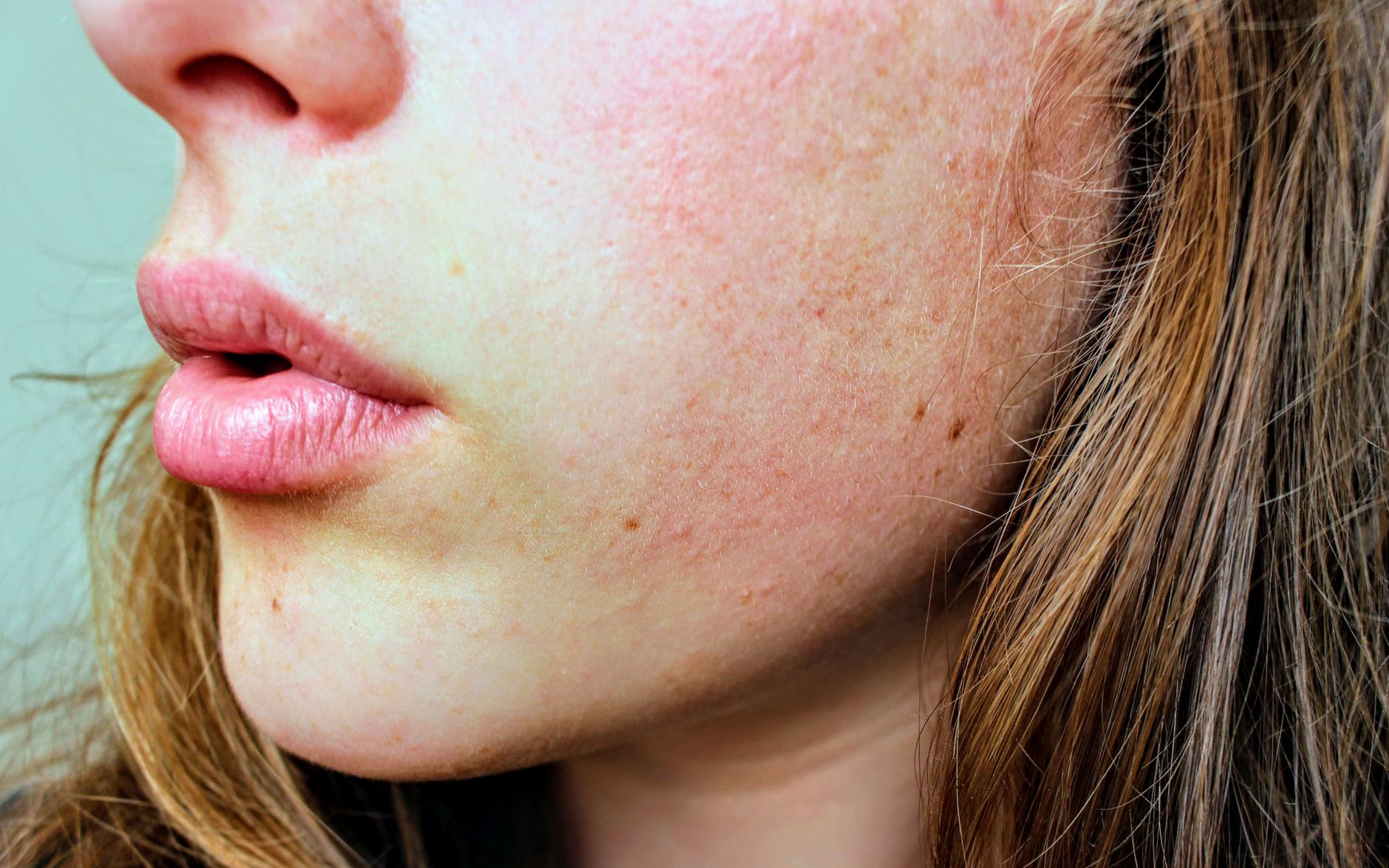
Pigmentation spots are areas of skin where more pigment has formed than in the surrounding skin, so they look darker. Cosmetologists call this hyperpigmentation. Spots can be small, like freckles, or larger and more sharply defined. It is an aesthetic problem that is treated with procedures and skincare, but first it is important to understand its cause.
Skin pigment forms with the help of the enzyme tyrosinase, and many lightening products work by acting on its activity. The harder the skin "defends" itself against an irritant, the more actively it produces pigment. So a spot is always a consequence of something: sun, injury, inflammation or the general state of the skin and body.
An important caveat. If a spot or mole changes — grows, changes colour or shape, bleeds — that is a reason to see a dermatologist, not to book a peel. A cosmetologist works with benign pigmentation that a doctor does not consider a disease.
Why pigmentation spots appear
The most common cause of pigmentation spots is UV light: intense sun stresses the skin, and it responds by producing pigment. Skincare mistakes also make spots worse: active products without sun protection, harsh cleansing, squeezing pimples. With age, pigmentation becomes one of the signs of mature skin, along with dryness and wrinkles.
A few situations Larysa Lonchar describes in her articles:
- Sun after retinol and acids. After products with retinol and fruit acids, the skin must not be exposed to sunlight — this is one of her "10 tanning rules".
- Harsh cleansing. A cleanser with a harsh formula used all summer often leads to pigmentation by autumn.
- Protection and tanning at the same time. If you have hyperpigmentation, don't combine an SPF cream on your face with a tan-boosting product on your body: decide what you actually need.
- Squeezing at home. Removing breakouts yourself leaves pigmentation or scars, which is why facial cleansing is best left to a cosmetologist.
- Age and ageing type. Pigmentation spots are one of the signs of mature skin; with the muscular ageing type, pigmentation can appear even when there are hardly any wrinkles.
Larysa Lonchar follows a bioregulatory approach: for her, pigmentation disorders, like skin ageing, are a reason to look at the state of the whole body, not just at the spot itself.
Which treatments lighten pigmentation
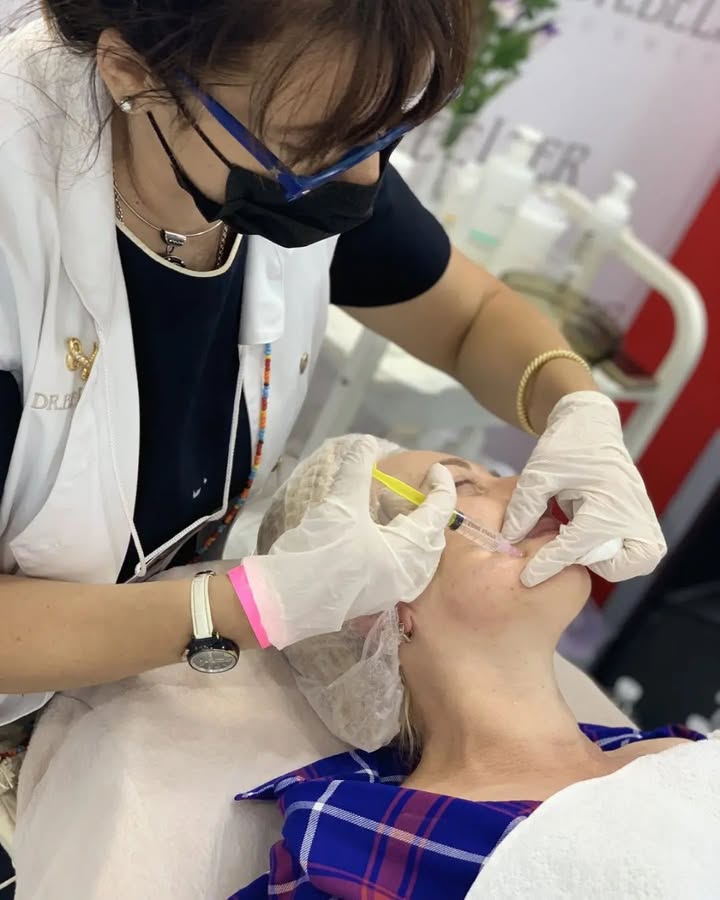
For pigmentation, a cosmetologist usually combines several methods: chemical peels, mesotherapy, microcurrents and biorevitalization. That is how Larysa Lonchar lists them in her "procedure cheat sheet". A peel renews the top layer of skin, injection methods nourish the dermis, and home care and sun protection lock in the result. There is no one-size-fits-all scheme — the programme is tailored to each person.
Peel. The main tool against pigmentation spots. On the Facial peel page, hyperpigmentation is listed first among the indications, and the effects of the procedure include lightening pigmentation spots and evening out skin tone. Biotonika's treatment room has a dedicated peel for treating hyperpigmentation; another option is Dermo Peeling by Mary Corn (Paris), after which the complexion becomes more even and pigmentation spots less noticeable.
Peel + mesotherapy in one session. A combined procedure is possible: a superficial peel plus homeomesotherapy. While the skin renews itself, areas of hyperpigmentation are lightened and the dermis receives vitamins, macro- and microelements. More about the method is on the Mesotherapy (homeomesotherapy) page.
Dr.Pen fractional mesotherapy. Its indications include a dull complexion and pigmentation spots.
Biorevitalization and microcurrents. Both methods belong to the set of procedures for pigmentation, but they work as part of a programme rather than as a stand-alone "fix for spots".
Comparing treatments for pigmentation
The procedures differ in how they work, how long they take and what they cost. A peel acts on pigment most directly, while injection methods improve overall skin quality and are often combined with it. Prices below are as of October 2026; "from" means the lower limit, and current prices are on the procedure pages. The final programme is drawn up by the doctor-cosmetologist.
| Procedure | How it works on pigmentation | Duration | Price |
|---|---|---|---|
| Peel for treating hyperpigmentation | renews the top layer, lightens spots | ≈ 30 min | from 1300 UAH |
| Peel + homeomesotherapy (one session) | skin renewal plus nourishment of the dermis | — | ask at the consultation |
| Mesotherapy (homeomesotherapy) | cocktail tailored to the goal, skin tone and complexion | — | from 1200 UAH |
| Dr.Pen fractional mesotherapy | indicated for a dull complexion and pigmentation spots | — | 2500 UAH |
| Biorevitalization | hydration and skin quality, part of a programme | — | from 5650 UAH |
How many procedures you need and in what combination is decided by the cosmetologist during the examination.
How a peel course for pigmentation works
A peel course is not a single procedure but 3–5 sessions 14 days apart, followed by a break. This is Larysa Lonchar's scheme. The skin is prepared in advance with a pre-peel cream, the procedure itself takes 30–60 minutes, and the renewing effect shows on days 2–5. Home care after each session is essential.
Step by step, it looks like this:
- Consultation. The doctor assesses your skin, asks about previous procedures, home care and your health, and rules out contraindications.
- Preparation. A special pre-peel cream; sometimes homeomesotherapy or biorevitalization. Preparation makes the peel more effective and lowers the risk of complications.
- Procedure. The peel is chosen individually; if needed, it is combined with homeomesotherapy in one session.
- Home care. Products chosen by the cosmetologist speed up regeneration and lock in the result.
- Break after the course. The next course is up to the doctor.
Autumn, when the sun is less active, is the traditional season for peels. But the season is not what matters most: whether you need a peel and when to start it is decided by the cosmetologist. More on season and frequency in the article Professional Peels in Autumn: How Often to Have One.
Post-acne marks: a special case
Dark marks left by breakouts are pigmentation too, but they need a different approach: first calm the inflammation, then lighten the marks. Done the other way round, new breakouts will keep leaving new spots. That is why, with acne, a cosmetologist builds a programme in several steps rather than prescribing a "pigmentation peel" straight away.
Biotonika's treatment room has a dedicated peel for this — for treating acne, post-acne and couperose (as of October 2026, from 1300 UAH, about 30 minutes). The procedures Larysa Lonchar lists for acne include mesotherapy, chemical peels, plasma therapy and facial cleansing. Post-acne scarring is also among the indications for a peel.
The most common mistake here is squeezing breakouts yourself. That is exactly how persistent spots and scars appear on the face, which then have to be treated with a full course. If breakouts keep coming back, that is a reason to get to the root cause with a doctor, not just cover up the marks.
Who should not have a peel
Peels are not for everyone: in some conditions they are postponed or replaced with another procedure. Contraindications include pregnancy and breastfeeding (for superficial-to-medium and medium peels), cancer, decompensated chronic diseases, inflammation with fever, herpes, eczema, psoriasis and dermatitis, allergy to the ingredients, and a tendency to keloid scarring.
That is why a consultation is always needed before a course: the doctor should know not only about your skin but also about your general health. If you are planning a holiday by the sea or in the mountains, mention that too — the sun is especially aggressive at such times, and it is better to reschedule the course.
How to avoid new spots
Without sun protection, any pigmentation lightening works less well, and new spots keep coming back. So the main rule is sunscreen on your face every day, not just at the beach, and no sun at all after products with retinol and acids. The rest is proper skincare matched to the season and the condition of your skin.
What helps at home:
- Sun protection. Apply before going outside and reapply, especially after swimming; avoid the midday sun and wear a hat. All the rules are in the article 10 Tanning Rules: How to Protect Your Skin from the Sun.
- Gentle cleansing. No harsh cleansers "because a blogger recommended them".
- Seasonal care. Change your products with the weather: after summer UV, your skin needs something different from what it needed in spring.
- No self-prescribing. Don't prescribe yourself a peel and don't use untested products.
- No squeezing. Breakouts and comedones are removed by a cosmetologist during facial cleansing — otherwise pigmentation is left in their place.
Where to start
Start with a consultation: the cosmetologist will determine what kind of pigmentation you have, check for contraindications and decide which procedures make sense to combine. If you can't come to the treatment room right now, you can book an online consultation — the doctor will ask about your skin, skincare and previous procedures and advise where to begin.
At a consultation with Larysa Lonchar, you get both a treatment programme and professional products for home use. To book, call +38 067 780 22 13 or message on Viber at the same number. Current peel prices are on the Facial peel page.
Questions and answers
Can pigmentation spots be removed completely?
No one can promise that. Treatments lighten spots and even out skin tone, but how visible the result is depends on the initial condition of your skin, how deep the pigment lies and whether you protect your skin from the sun after the course. A cosmetologist draws up a realistic plan at the consultation.
Which peel helps with pigmentation spots?
Biotonika's treatment room offers a dedicated peel for treating hyperpigmentation; the cosmetologist chooses the specific product and its strength for your skin. The procedure takes about 30 minutes and, as of October 2026, costs from 1300 UAH.
How many peel sessions do I need?
Larysa Lonchar recommends a professional peel once every 14 days, in a course of no more than 3–5 procedures, followed by a break. The exact number is set at the consultation.
When is the best time for a peel against pigmentation?
Traditionally in autumn, when the sun is less active. But whether you need a peel and when to start it is up to the cosmetologist. Sun protection is a must during and after the course.
Can I lighten spots at home?
At home, what matters is sun protection and skincare chosen by a cosmetologist. Don't prescribe yourself a peel or use untested products: that can lead to irritation and new pigmentation.
Why does pigmentation become more visible after summer?
UV light boosts pigment production. Skincare mistakes make spots worse too: products with retinol or acids used without sun protection, or harsh cleansing all summer long.
When should I see a doctor about a spot rather than a cosmetologist?
If a spot or mole changes quickly — grows, changes colour or shape, bleeds or itches — a dermatologist should examine it first. Cosmetic procedures are done only after a doctor has ruled out disease.