To become a cosmetologist from scratch, you need a basic cosmetology course with a large share of practice, a qualification certificate and a first portfolio. A medical degree is not required to start, but it determines which procedures you can perform later. Here is what the path looks like and what a basic course includes.
How to become a cosmetologist: the short answer
The path has four steps: choose a direction (esthetician or medical cosmetologist), complete a basic course with theory and hands-on practice on models, get your certificate and build a portfolio. After that comes professional development: master classes in specific techniques. Without a medical degree, you start with aesthetic cosmetology.
You do not need any prior experience in beauty to start. Biotonika describes the basic cosmetology course as a fit for people who want a new profession or their own business, medical professionals looking for a new specialisation, those moving abroad, and those who simply want to learn to care for themselves and their family.
Esthetician vs medical cosmetologist: what is the difference
An esthetician works on the skin's surface: facial cleansing, massage, masks, peels, hardware treatments and skincare programmes. A medical cosmetologist has a medical degree and can also perform injectable techniques. If you are starting without medical education, aesthetic cosmetology is the right entry point — you can learn it with no beauty experience at all.
Injectable procedures — mesotherapy, biorevitalisation, botulinum therapy, dermal fillers — are a separate level of the profession. They are taught in specialised courses and master classes with stricter education requirements. Biotonika runs such programmes too, for example the master classes "Basics of Mesotherapy", "Preventing Complications in Contour Plastics" and one on botulinum therapy. But you do not start there: basic cosmetology gives you the foundation — understanding the skin — without which advanced techniques make little sense.
Is cosmetology the right profession for you
Cosmetology suits people who are curious about how the skin works, enjoy working with their hands and like dealing with people. A cosmetologist sees different clients every day, manages their expectations and explains why one procedure will suit them and another will not. Patience, precision and a willingness to keep learning matter as much as technique.
A few questions worth answering honestly before you enrol:
- Are you curious about how the skin works? There is a lot of theory: anatomy, dermatology, diagnostics. Without it, procedures become mechanical movements.
- Are you comfortable touching people and working close to their face? Massage and cleansing involve long physical contact.
- Are you ready for physical work? A cosmetologist spends many hours working with their hands, often in one position.
- Will you keep learning after the course? Techniques and products change, and good cosmetologists attend master classes regularly.
- Do you value independence? The profession can be combined with your own schedule and your own practice, and cosmetologists are needed in every country.
If you answer "yes" to most of them, a basic course is a logical first step.
What a basic cosmetology course covers
A basic course combines theory about the skin with practice in procedures. Theory covers facial anatomy, skin structure, skin diseases and first aid, diagnostics and types of ageing. Practice covers cosmetic facial cleansing, facial massage, peels, masks, hardware cosmetology and building skincare programmes. The course ends with independent work with clients and an exam.
The programme of Biotonika's basic and hardware cosmetology course has 17 sections. Grouped together, they look like this:
- Foundations: cosmetology as a science, anatomy of the face and neck, blood supply, the lymphatic system and facial innervation.
- Skin: structure and functions, dermatology, infectious and non-infectious skin diseases, skin growths, the influence of hormones and internal organs.
- Safety: first aid for anaphylactic shock, angioedema and urticaria; personal safety; disinfection and sterilisation.
- Diagnostics: skin types, types and factors of ageing, photoageing, aesthetic concerns — pigmentation, couperose, puffiness, scars, wrinkles.
- Procedures: cosmetic cleansing, massage (cosmetic, plastic, collar-zone, Jacquet and head massage), peels, masks, hardware cosmetology.
- The profession: treatment-room requirements, regulations, pricing of procedures, the current cosmetics market.
How many hours of practice you need
The basic course at Biotonika is 390 hours over 2 months: 100 hours of theory, 282 hours of practice and an 8-hour exam. In other words, more than two thirds of the time is hands-on work. The most practice goes into facial massage (36 hours), anti-age therapy (18 hours) and hardware cosmetology (16 hours).
| Module | Theory | Practice | What you can do afterwards |
|---|---|---|---|
| Cosmetic facial cleansing | 4 h | 10 h | identify indications, perform a step-by-step cleansing, give aftercare advice |
| Facial massage | 4 h | 36 h | perform the core techniques along the massage lines, take contraindications into account |
| Treating and correcting skin imperfections | 4 h | 12 h | choose care for acne, comedones, enlarged pores and pigmentation |
| Anti-age therapy | 4 h | 18 h | put together a set of care procedures for signs of ageing |
| Hardware cosmetology | 4 h | 16 h | work with light, electro-, vacuum and cryotherapy, darsonvalisation, galvanisation |
Peels are covered as theory plus a demonstration master class, and the course ends with independent work with clients. Groups are small, 4–5 people, so everyone gets practice time under a teacher's supervision.
How practice works and why a portfolio matters
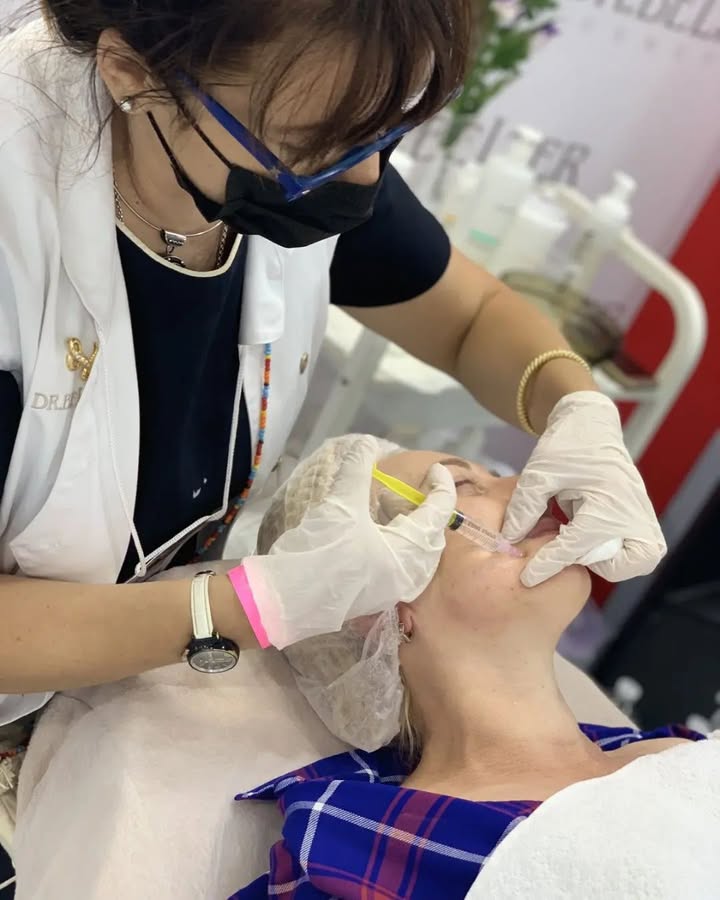
Practice on the course means working with models as if they were real clients, under a teacher's supervision. The school invites models, and students also practise on each other. You can bring your friends — the beginning of your own client base. During the course you build a portfolio to show an employer or your first clients.
For a beginner, a portfolio matters as much as a certificate: before-and-after photos, procedure notes and model feedback show that you have real hands-on experience. At Biotonika, students practise with professional products from Algologie (France), Rosa Graf and Dr.Belter (Germany) on modern equipment, and the products used in class are included in the course fee.
What certificate you receive
After the basic course, Biotonika issues a standard certificate in "Basic Cosmetology. Hardware Cosmetology". It confirms your qualification when you apply to a salon or clinic and lets you buy professional cosmetic products at wholesale prices. You receive it after the exam that completes the course.
Biotonika represents Svetozar Marković University (Belgrade, Serbia) in Ukraine, and graduates can also obtain a Serbian diploma. What it gives you and how to get it is explained on the European diploma page. If you live abroad and want to start studying remotely, read Learn Cosmetology from Scratch Online, with a Diploma.
How to choose a cosmetology course: 7 questions to ask
When choosing a cosmetology course, compare more than the price: look at the share of practice, group size, teachers and support after graduation. A good course openly shows its programme with hours, names the cosmetic brands and equipment, offers practice on models and explains which certificate you will receive. Here are seven questions to ask.
- How many hours of practice and how many of theory? The share of practice matters more than the total length.
- How many people per group? In a large group, each student gets less time with the teacher.
- Who teaches, and do the teachers practise themselves?
- Who do you practise on — mannequins, each other or models?
- Which products and equipment will you use, and are the products included in the price?
- What certificate is issued and what does it allow you to do?
- What happens after the course? Can you ask the teacher questions and come back to practise a skill again?
You can compare Biotonika's programmes — the basic course and master classes for practitioners — on the Courses page.
First steps after the course: salon or your own practice
After a basic course, an esthetician can work in a beauty salon or clinic or open their own treatment room. For your own practice you need to know the requirements for the premises, sterilisation and pricing — these topics are part of the programme. In the first months it helps to have an experienced mentor you can ask about difficult cases.
At Biotonika, support does not end with the course. If you run into difficulties with your first clients, you can consult the teacher by phone or in a Viber chat by sending photos, and come back free of charge to practise a skill under supervision. The school also shares information about vacancies at partner salons and gives recommendations for employment.
From there, your profession grows with you: master classes in chemical peels, mesotherapy, acne treatment and comprehensive facial rejuvenation. And to see at a glance which procedures help with which skin concerns, save the cosmetologist's procedure cheat sheet.
Questions and answers
Can I become a cosmetologist without a medical degree?
Yes, the profession of esthetician (cosmetic cosmetologist) can be learned from scratch. Biotonika's basic and hardware cosmetology course is designed for beginners and does not require a medical degree. Injectable techniques are a separate level that requires medical education.
How long does cosmetology training take?
The basic course at Biotonika takes 2 months, or 390 hours: 100 hours of theory, 282 hours of practice and an 8-hour exam.
How much does a beginner cosmetology course cost?
The basic and hardware cosmetology course costs UAH 16,000 (price as of October 2026). Cosmetic products used in class and study materials are included.
Can I study cosmetology online?
Theory can be studied remotely via Skype or Zoom, but practice — facial cleansing, massage, hardware treatments — is done in person on models in Kyiv.
What will I be able to do after a basic course?
Assess skin condition, perform a cosmetic facial cleansing, facial massage and basic hardware treatments, choose masks, and put together in-salon and home skincare programmes.
What certificate do I get after the course?
A standard certificate in "Basic Cosmetology. Hardware Cosmetology". For the option of a diploma from Svetozar Marković University (Serbia), see the European diploma page.