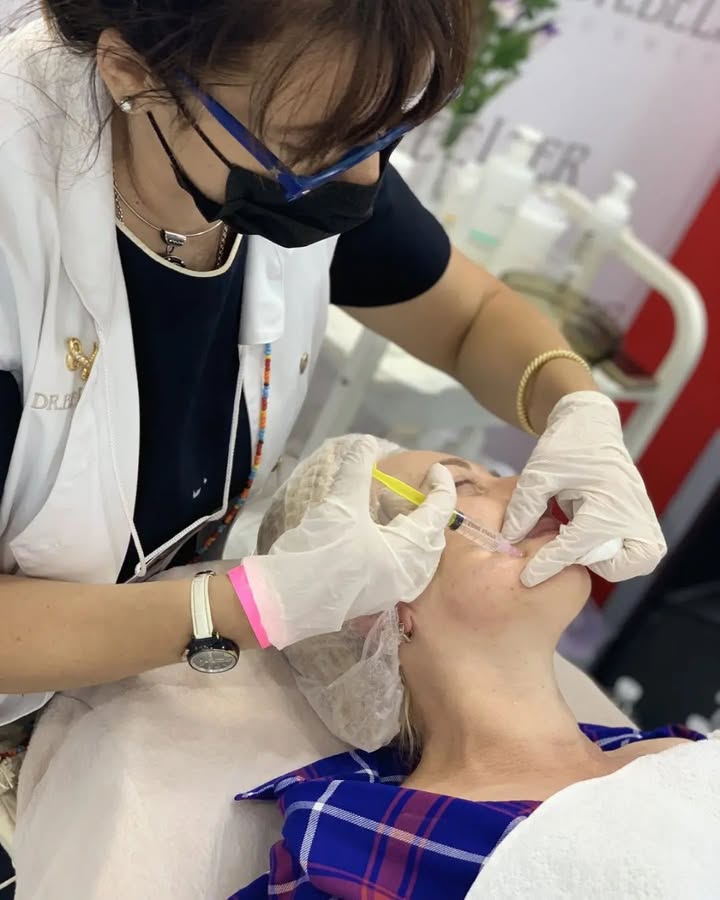
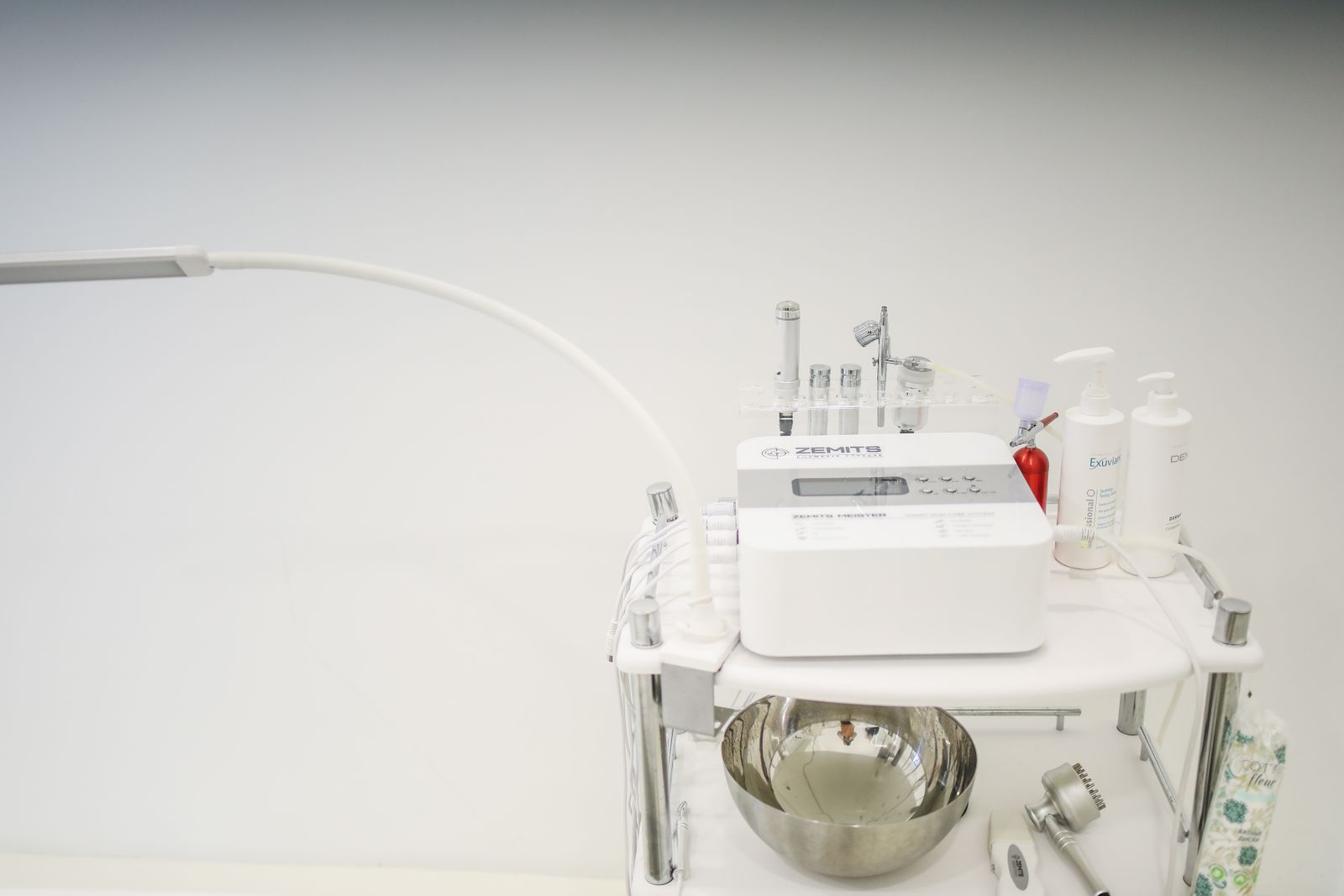
Hardware cosmetology can scare beginners with its terminology — galvanisation, darsonvalisation, cryotherapy. In fact each method is built on one simple physical factor: current, light, vacuum or cold. Here is which devices you learn on a basic course, what a cosmetologist uses each of them for, and how to master this part of the profession from scratch.
What is hardware cosmetology: the short answer
Hardware cosmetology covers treatments in which the skin is worked on with special devices: electric current, light, vacuum, cold or ultrasound. Devices help cleanse the skin, tone the facial muscles, improve microcirculation and deliver cosmetic products deeper. Which method to choose depends above all on the client's problem.
Modern cosmetology has a huge number of devices and products, and new models appear every year. But most of them rely on the same physical principles. That is why a basic course teaches not a specific device brand but the method: how it acts on the skin, who it suits, who should avoid it and how to carry out the treatment safely. Once you understand the principle, you can easily master any new model.
Which methods are taught on a basic course
On the basic and hardware cosmetology course at Biotonika, hardware cosmetology has its own section of the programme — 4 hours of theory and 16 hours of practice. It covers six areas: light therapy, electrotherapy, vacuum therapy, cryotherapy, darsonvalisation and galvanisation. There is four times more practice than theory: methods are learned hands-on, on models and on fellow students.
The hardware module does not come first. Before it, the course covers facial anatomy, skin structure, skin diseases and skin assessment, as well as treatment-room requirements, disinfection and sterilisation. This is not a formality: without understanding the skin you cannot decide who a device treatment will help and who it may harm.
Devices also appear in other modules. In the facial cleansing topic, for example, the course covers its types — manual and device-based — and how they are combined in one treatment. Overall the course lasts 2 months: 100 hours of theory, 282 hours of practice and an 8-hour exam, in groups of 4–5 people.
Electrotherapy: microcurrents, galvanisation, darsonvalisation
Electrotherapy is the largest group of hardware methods: weak electric currents of different types act on the skin and muscles. Microcurrents tone the facial muscles, galvanisation uses direct current to cleanse and deliver products, and darsonvalisation uses high-frequency pulsed currents. Different currents mean different goals and different contraindications.
Microcurrents are very weak pulses, close in strength to the body's own bioelectric currents. Cosmetologists use them for facial muscle tone and skin quality. In Larysa Lonchar's table of treatments, microcurrents are listed among the methods that help with enlarged pores, pigmentation and expression lines — as part of a combined approach, not as a miracle on their own.
Galvanisation uses a low-strength direct current. In cosmetology it is most often used in two ways: for deeper skin cleansing (disincrustation) and for delivering active ingredients into the skin (iontophoresis).
Darsonvalisation uses a high-frequency, high-voltage but low-strength pulsed current applied through glass electrodes. It is used, among other things, in care for problem skin and to improve microcirculation.
Light therapy, vacuum and cryotherapy
Three more methods on the basic course do not use current. Light therapy uses light of specific wavelengths, vacuum therapy uses controlled negative pressure, and cryotherapy uses cold. They are applied in skincare, for tone, to improve microcirculation and as part of combined programmes. As with electrotherapy, the key is knowing the indications and contraindications.
Light therapy (phototherapy) exposes the skin to light of different spectra. Larysa Lonchar includes phototherapy in her comprehensive facial care programmes alongside microcurrents and ultrasonic cleansing.
Vacuum therapy applies controlled negative pressure through special attachments. Vacuum is used for massage and tissue drainage, and also for skin cleansing.
Cryotherapy uses cold. Cold constricts blood vessels, which then dilate after the treatment, so cryo procedures are used for skin tone and in care for certain skin conditions.
Comparing hardware cosmetology methods
The six methods of the basic course differ in their physical factor, goals and limitations. The table below is a beginner's cheat sheet: what each method uses, what it is typically used for and what to watch out for. Specific contraindications for each method and each device are covered in detail on the course and in the manufacturer's instructions.
| Method | What it uses | Typically used for | What to watch out for |
|---|---|---|---|
| Microcurrents (electrotherapy) | weak pulsed currents | facial muscle tone, skin quality; as part of a programme — pores, pigmentation, lines | electrotherapy contraindications; results come with a course of sessions |
| Galvanisation | low-strength direct current | deeper cleansing (disincrustation), product delivery (iontophoresis) | polarity and product composition; electrotherapy contraindications |
| Darsonvalisation | high-frequency pulsed current | care for problem skin, microcirculation | glass electrodes, sterile attachments |
| Light therapy | light of specific wavelengths | skincare and combined programmes | photosensitivity and medicines that increase it |
| Vacuum therapy | controlled negative pressure | massage, drainage, cleansing | caution with visible capillaries and thin skin |
| Cryotherapy | cold | skin tone, skincare programmes | cold sensitivity, condition of blood vessels |
Ultrasound and needle-free delivery: how devices work in a real treatment
In real practice devices are rarely used on their own: a cosmetologist combines several methods within one treatment. A good example is the facial cleansing at Biotonika: an ultrasonic scrubber finishes cleaning the pores, the BioOxygen device delivers products by needle-free mesotherapy, and microcurrents tone the facial muscles. Understanding each method is what lets you build such a programme.
This is how the facial cleansing at Biotonika works: manual cleansing only on heavily congested areas, then the ultrasonic scrubber, then the BioOxygen device and a professional mask for the skin type. Here the device does not replace the cosmetologist's hands; it complements them.
It is just as important to understand the limits of devices. An ultrasonic scrubber really does work as a phonophoresis device — it helps products penetrate deeper — but it does not "pull out" deep comedones or give a lifting effect. Explaining honestly to the client what a device can and cannot do is part of the profession; Larysa Lonchar covers this in her article "Ultrasonic Skin Scrubber: Myths and Reality".
Safety and contraindications: why theory matters more than the device
Device treatments have contraindications, and you need to know them by heart. For treatments using current, the list usually includes pregnancy, a pacemaker and metal implants in the treatment area, cancer, acute inflammation and damaged skin. That is why the hardware module comes after anatomy, dermatology and skin assessment.
Biotonika's course separately covers emergency first aid for anaphylactic shock, angioedema and urticaria, as well as disinfection and sterilisation. This is especially important in hardware cosmetology: attachments and electrodes come into contact with the skin of many clients.
Another safety rule is to question the client before the treatment. Chronic conditions, medication, pregnancy, implants, reactions to previous treatments: the cosmetologist checks all of this before switching the device on. Specific contraindications are also listed in each device's manufacturer instructions.
A good habit from day one is to note in the client's record which method you used and with what settings, how the skin reacted and what you recommended for home care. That way the next treatment is based on facts rather than memory, and it is easier to see what actually works.
Do you need to buy a device straight away
There is no need to buy a device before training: on the course you practise on the school's equipment. It is better to master the methods first, find out which ones you are comfortable with and which treatments your clients need, and only then decide what to buy. A device that does not fit your practice will simply sit unused.
When choosing a device after the course, consider a few things:
- which methods you really need — a multifunction unit is not always better value than one or two devices you use every day;
- documents and service — instructions in a language you understand, a warranty, the possibility of repairs;
- consumables and products — some methods require special gels or solutions;
- your teacher's advice — at Biotonika you can contact your teacher with questions after the course, and choosing equipment is one of them.
How to learn hardware cosmetology from scratch
The most reliable route is a basic course in which hardware cosmetology comes together with skin theory and hands-on manual treatments. At Biotonika this is the basic and hardware cosmetology course: 2 months, 390 hours, practice on models, groups of 4–5 and a certificate in "Basic Cosmetology. Hardware Cosmetology".
As of October 2026 the course costs UAH 16,000; cosmetic products used in class and study materials are included. A medical degree is not required. Theory can be studied remotely, while practice takes place in person in Kyiv. After the course you can come back and practise a skill again free of charge under a teacher's supervision.
After the basic level, the profession grows through master classes in specific techniques — chemical peels, mesotherapy, acne treatment, comprehensive facial rejuvenation. All of the school's programmes with prices are on the "Courses" page.
Questions and answers
What is hardware cosmetology?
It covers treatments in which the skin is worked on with devices: electric currents, light, vacuum, cold or ultrasound. Devices help cleanse the skin, tone the facial muscles, improve microcirculation and deliver cosmetic products deeper. The choice of method depends on the problem to be solved.
Which devices are covered in a basic cosmetology course?
Biotonika's basic and hardware cosmetology course covers six areas: light therapy, electrotherapy, vacuum therapy, cryotherapy, darsonvalisation and galvanisation. The module consists of 4 hours of theory and 16 hours of practice.
Can I study hardware cosmetology without a medical degree?
Yes. Basic hardware cosmetology is part of the beginners' course, which does not require a medical degree. Injectable techniques are a separate level with stricter educational requirements.
Do I need to buy a device before I start training?
No. On the course you practise on the school's equipment. It is better to buy devices after training, once you know which methods you are comfortable with and which treatments your clients need.
How much does a hardware cosmetology course cost?
At Biotonika, hardware cosmetology is part of the basic and hardware cosmetology course: 2 months, 390 hours, UAH 16,000 (price as of October 2026). Cosmetic products used in class are included.
Do hardware treatments replace a cosmetologist's manual work?
No, they complement it. In a combined facial cleansing, for example, deep congestion is removed by hand and an ultrasonic scrubber finishes cleaning the pores. A device is a tool; the result depends on whether the cosmetologist chose the right method for the particular skin.