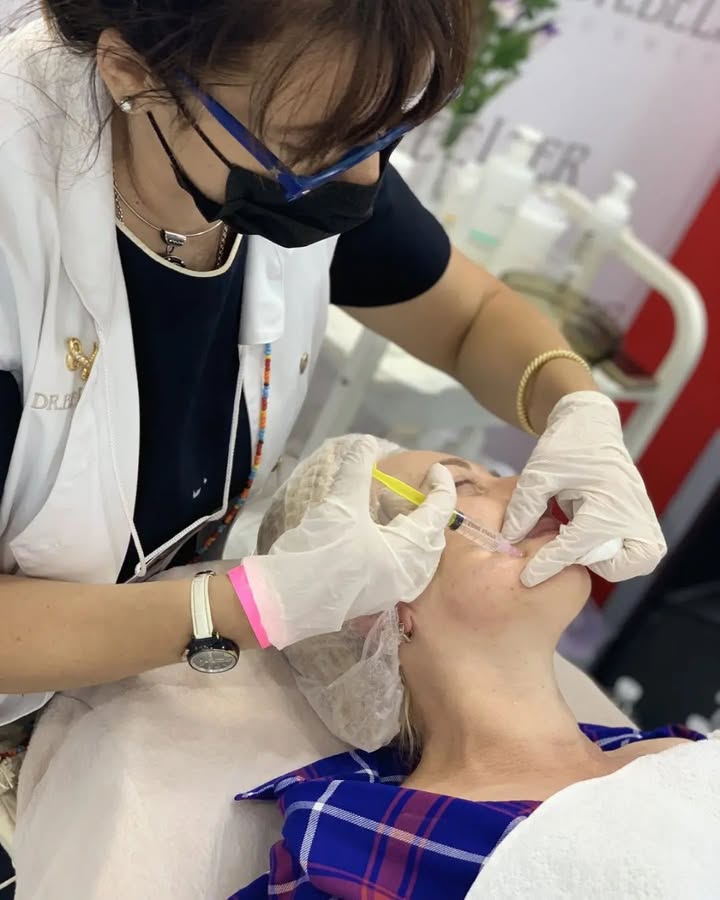

For a first lip treatment, even for a small volume, 1 ml of filler is not too much: the first millilitre mostly goes into hydration, filling hollows in the lips and smoothing lines. You can repeat the treatment after 6 months or after 2 years — the product dissolves differently in everyone. If you don't like the result, the filler is removed with the enzyme hyaluronidase.
How much filler you need the first time
The first time, 1 ml is definitely not too much, even if you want a very small volume. In most cases the first millilitre goes into hydrating the lips, filling hollows in them and smoothing lines. In other words, part of the product works on lip quality rather than on a visible increase.
How often you can get lip filler
As often as you like: some people come back after 2 years, others after 6 months. There is no single schedule, because the product dissolves differently in everyone. Go by how you feel and by the doctor's examination: a top-up is needed when the effect has faded, not by the calendar.
| Question | Answer |
|---|---|
| Volume the first time | 1 ml is not too much |
| Top-up | from 6 months to 2 years, individually |
| Allergy | not observed to hyaluronic acid; possible to lidocaine |
| If you stop | the lips return to how they were before |
| How to remove filler | with the enzyme hyaluronidase |
| New filler after hyaluronidase | after 2–3 weeks |
Soft filler: what it means
Lip fillers are made from hyaluronic acid, and the gel comes in different densities. A "soft" filler usually means a less dense gel. The properties of a particular product and whether it suits you are decided by the doctor after examining your lips.
Can you be allergic to the product?
Allergy to hyaluronic acid, which fillers are based on, is not observed: it is similar to the acid found in our own body. Some people are allergic to lidocaine, which some products contain. If you've had, for example, dental treatment with an injection and no allergy appeared, there is nothing to fear.
What happens if I don't want lip filler any more?
Nothing. Or rather, everything goes back to how it was: the product leaves the body, and your lips look the same as before the treatment. Whether to continue is up to you.
How to remove filler from the lips
If for some reason you don't like the result, the filler can be dissolved with an enzyme — hyaluronidase. You can't remove the old gel and get new lips straight away: 2–3 weeks must pass between the hyaluronidase treatment and new filler.
How to prepare for lip filler and what to avoid afterwards — see Lip Fillers: Before and Aftercare Tips. General questions about your lips and facial skin can be discussed at a consultation with cosmetologist Larysa Lonchar. Hyaluronic acid is also used to improve facial skin quality — see the biorevitalization page.
For cosmetologists who work with fillers — the master class "Prevention of Complications in Contour Plastics".
First published on the Biotonika school Facebook page on 14.08.2023. Updated 09.10.2026.
Questions and answers
How much lip filler do I need the first time?
Even for a small volume, 1 ml is not too much: the first millilitre mostly goes into hydration, filling hollows in the lips and smoothing lines.
How often can I get lip filler?
As often as you like: some people come back after 6 months, others after 2 years. The product dissolves differently in everyone, so the timing of a top-up is individual.
What is a soft lip filler?
Usually this means a less dense hyaluronic acid gel. The properties of a particular product and whether it suits you are decided by the doctor.
Can you be allergic to filler?
Allergy to hyaluronic acid is not observed. Some people are allergic to lidocaine, which some products contain; if you've had a dental injection without a reaction, there is nothing to fear.
What happens if I stop getting lip filler?
Nothing: the product leaves the body, and your lips look the same as before the treatment.
Can new filler be injected right after hyaluronidase?
No, 2–3 weeks must pass between dissolving filler with hyaluronidase and injecting a new one.