Chemical Peels Through a Cosmetologist's Eyes: What to Know Before Your First Client Procedure
The first chemical peel with a client is the moment when theory meets real skin. What matters is not only the product and how it is applied, but also the consultation, preparation, the course and aftercare. Here is what a cosmetologist should know before the first procedure and how this is taught at Biotonika.
Why a peel is not "just applying acid"
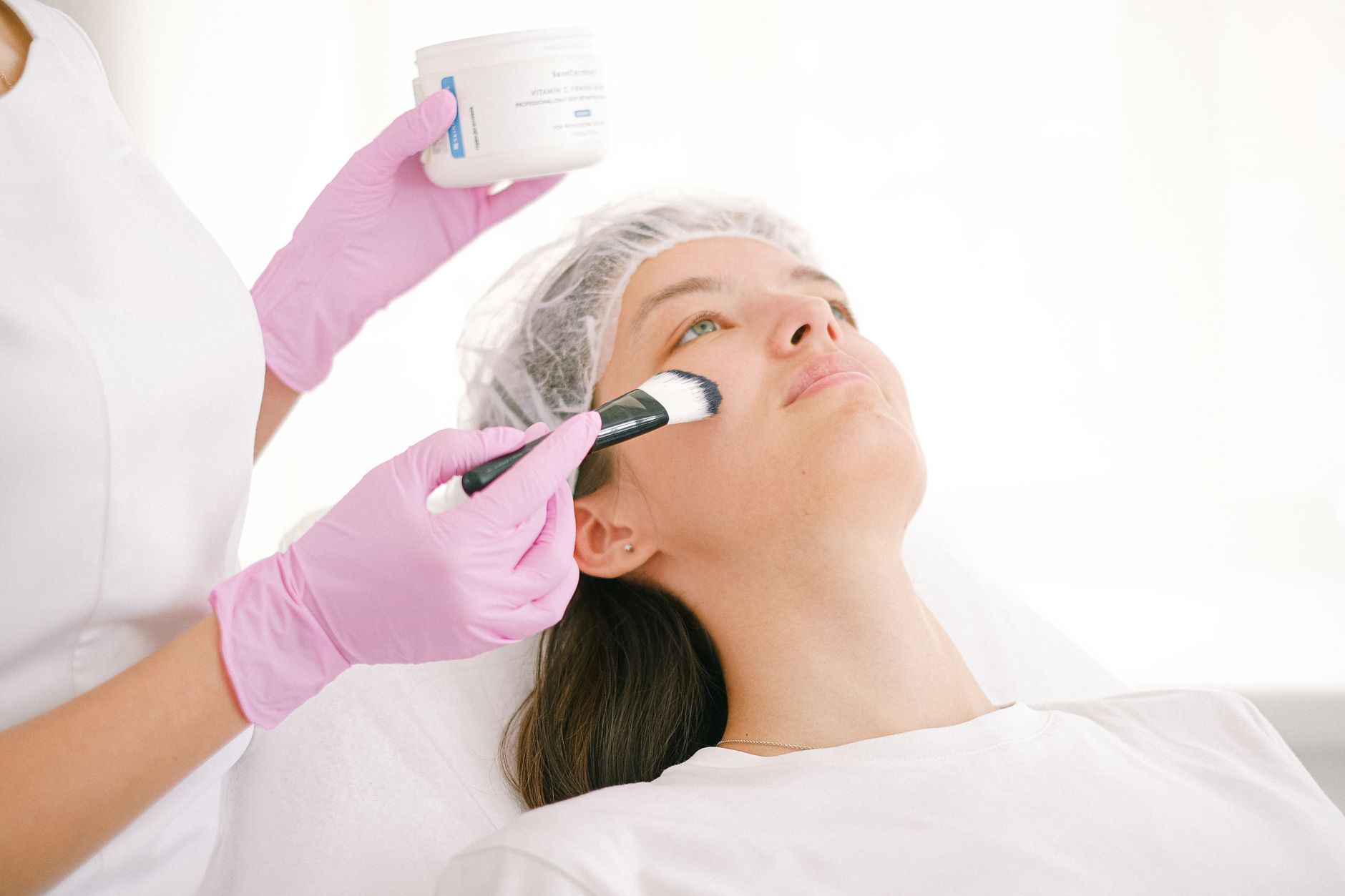
A chemical peel is controlled damage to the upper layers of the skin, after which the skin renews itself. So the result depends on choosing a product for the specific skin, preparation, sticking to the course and home care. A cosmetologist who works "by the manufacturer's instructions" cannot see when a peel should be postponed or replaced.
Peels have a broad range of effects: exfoliating, anti-inflammatory, moisturising, keratolytic, brightening and rejuvenating. That is why they are used for very different concerns — hyperpigmentation, flaking, age-related changes, post-acne scarring, uneven texture, stretch marks and couperose. But each of these concerns needs its own product and its own strength of action.
At the Biotonika practice, for example, there are separate peels for treating acne, post-acne and couperose and for correcting hyperpigmentation, as well as the care programmes "Skin Radiance" and "Skin Youth". Larysa Lonchar stresses that she always chooses a peel individually.
The consultation before the first peel
The first procedure starts with a consultation, not with applying a product. The cosmetologist needs to find out the client's health, previous procedures and how the skin reacted to them, their current home care and plans for sun exposure in the coming weeks. Without this, it is impossible either to rule out contraindications or to choose a peel.
What to ask at the first meeting — following the list Larysa Lonchar uses in her own consultations:
- Health, chronic conditions, individual characteristics, pregnancy or breastfeeding.
- Habits and pace of life — in particular, whether the client spends a lot of time in the sun.
- Previous procedures with a cosmetologist and how the skin reacted to them.
- Home care: photos of the products the person uses help a lot — especially those with retinol and acids.
- What the client expects from the procedure — so you can agree on a realistic result from the start.
Contraindications to check
Contraindications are the main filter before a peel. The procedure is postponed in case of pregnancy and breastfeeding (for superficial-to-medium and medium peels), cancer, decompensated chronic diseases, inflammation with fever, skin diseases, allergy to the ingredients and a tendency to keloid scarring. Check them at every visit, not only the first one.
A separate note on skin diseases: psoriasis, eczema, dermatitis, purulent processes and herpes. If the client has active herpes, the peel is rescheduled — even if the appointment was booked long ago. If it is unclear what a rash on the skin is, the client is first referred to a doctor.
Another filter is the sun. After products with retinol and fruit acids, the skin must not be exposed to sunlight, so if the client is flying to the seaside in a week, it is better to postpone the course. That is why autumn is the traditional time for peels.
Skin preparation, the course and aftercare
For the best effect, the skin is prepared for a peel with a special pre-peel cream, sometimes with homeomesotherapy or biorevitalization. The procedure itself takes 30–60 minutes, and the renewing effect shows on day 2–5. The course is once every 14 days, a maximum of 3–5 procedures, then a break. Home care after each session is mandatory.
A few practical points:
- Preparation reduces risks. It makes the procedure more effective and lowers the risk of complications — it is not an "upsell" but part of the protocol.
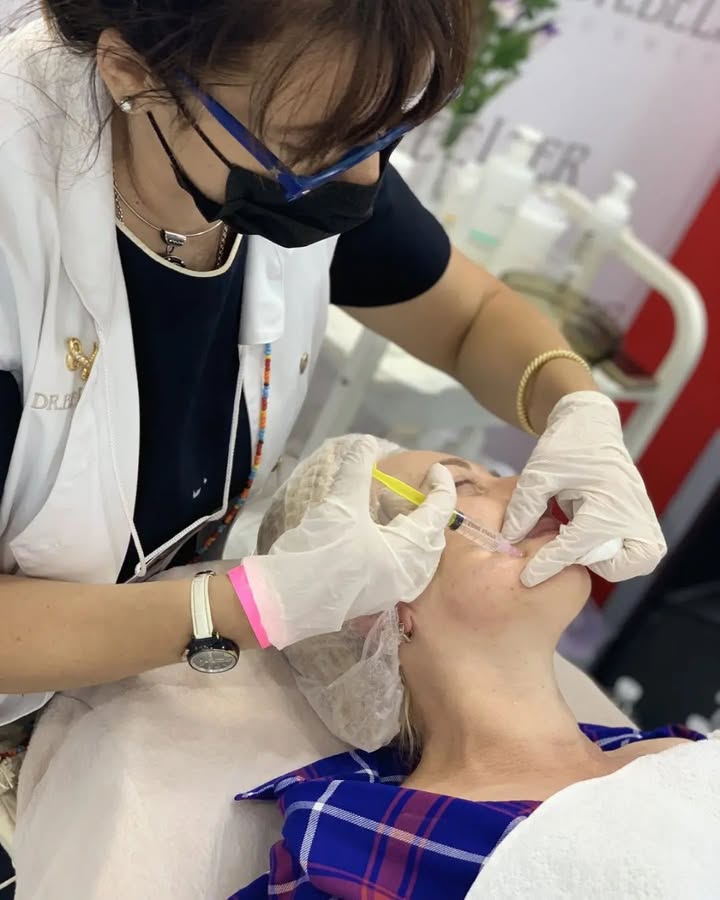
- A peel can be combined with mesotherapy. The combined procedure is a superficial peel and homeomesotherapy in one session: while the skin renews itself, the dermis receives vitamins, macro- and microelements.
- Aftercare is as important as the procedure. Properly chosen products speed up epithelial regeneration. The client should leave the procedure with clear recommendations.
- The client does not prescribe a peel for themselves. Larysa Lonchar asks clients not to "prescribe" peels for themselves or use untested products — and the cosmetologist should explain this.
Larysa Lonchar describes the course scheme in the article Professional Peels in Autumn: How Often to Have One — it is handy to show to clients.
Common mistakes in the first procedure
Most problems after a peel are caused not by the product itself but by what was missed before or after the procedure. Most often it is a consultation without questions about health and sun, a peel without skin preparation, sessions that are too frequent and a client who goes home without an aftercare plan. All of these mistakes can be anticipated in advance.
What to keep in mind when starting out:
- A peel "like a colleague's". The same product for every client ignores skin type and condition. A peel is always chosen individually.
- No preparation. Skipping the pre-peel cream lowers effectiveness and raises the risk of complications.
- More often than needed. The interval is 14 days, no more than 3–5 procedures per course, then a break. "One more session to speed things up" is not an argument.
- Sun after the procedure. The client must know that SPF is required every day and that tanning during the course is not allowed.
- A silent ending. Without an explanation of home care, the client may pick up an aggressive product "on a blogger's advice" and undo the result.
- An unexpected result. If you do not explain that the renewing effect shows on day 2–5, the client judges the procedure right after it — and is disappointed.
Peel formats: from home use to mesopeel
Peels differ not only in the acid but also in format: a gentle enzyme product for home use, a superficial peel in the treatment room, a combination with mesotherapy or a multilayer technique. Understanding these formats helps a cosmetologist build a programme: what to do in the treatment room, what to leave to the client at home and what to combine in one session.
| Format | Where | What for | What to watch |
|---|---|---|---|
| Enzyme cream peel (e.g. Intensa with papain) | at home | gentle exfoliation, smoothness | suits even sensitive skin; chosen by the cosmetologist |
| Superficial chemical peel | in the treatment room | skin renewal, tone, pores, pigmentation | preparation, course of 3–5 procedures, aftercare |
| Peel + homeomesotherapy in one session | in the treatment room | renewal plus nourishing the dermis | requires knowledge of both peels and mesotherapy |
| Mesopeel (layering peels with mesotherapy products) | in the treatment room | anti-age | a technique for specialists experienced with peels |
| Professional lines (e.g. SesDerma Mediderma) | treatment room only | over 70 types of peels for different tasks | not sold to the public |
The comparison of acid and enzyme peels, as well as mesopeel, is covered in the Chemical Peeling master class.
What the Chemical Peeling master class teaches
Biotonika's Chemical Peeling master class is 4 hours for cosmetologists and doctors who already work with peels or are only planning to introduce them into their practice. The programme goes from types of peels to complications and post-peel care. The practical part consists of tests and peel demonstrations, and certificates are presented at the end.
The theory covers:
- general information, types and stages of chemical peeling;
- acids and enzymes as peeling agents, a comparison of acid and enzyme peels;
- indications and contraindications;
- desirable and undesirable effects on the epidermis and dermis;
- possible complications and post-peel care;
- mesopeel.
Practice on models is not listed in the programme — worth bearing in mind if hands-on training is specifically what you need. Training takes place in Kyiv, on site in your city or remotely via Skype or Zoom, in a group or one-to-one. As of October 2026 the price is from 1,500 UAH; details on the Chemical Peeling page.
The master class is taught by cosmetic doctor Larysa Lonchar: higher medical education, specialising in homotoxicology, in cosmetology since 2000. She has taught chemical peels to cosmetologists in different cities of Ukraine for many years: in 2017, seminars on Mesosystem peels (modern classifications, the role of the acidity constant for the pH of a solution, TCA- and retinoic-acid-based peels, pre-peel preparation), and in 2018, her own seminar on multilayer peeling and the logic of combining acids.
How to build your peel training
If you are just entering the profession, start with the foundations: the basic and hardware cosmetology course includes a peels block — theory and an introductory master class. If you already work, the Chemical Peeling master class will systematise your knowledge. And to combine peels with mesotherapy, it is worth taking Mesotherapy Basics as well.
A possible route:
- Basic and Hardware Cosmetology Course — the foundations of skin care, facial cleansing and massage, and a first introduction to peels.
- The Chemical Peeling master class — a conscious choice of product, complications, post-peel care.
- Mesotherapy Basics — to perform combined procedures with confidence.
- The Bioregulatory Cosmetology Master Classes cycle — five topics, chemical peeling among them; as of October 2026, from 22,000 UAH for the full cycle.
We covered how to choose other topics after a basic course in the article Professional Development for Cosmetologists: Which Master Classes to Take After a Basic Course. To sign up or ask about the next group, call +38 067 780 22 13 or message on Viber at the same number.
Questions and answers
What should be done before the first chemical peel with a client?
Hold a consultation: ask about health, previous procedures, how the skin reacted, home care and plans for sun exposure, and rule out contraindications. Then prepare the skin with a pre-peel cream and explain to the client how to care for their skin after the procedure.
What are the contraindications to a chemical peel?
They include pregnancy and breastfeeding (for superficial-to-medium and medium peels), cancer, decompensated chronic diseases, inflammation with fever, herpes, eczema, psoriasis, dermatitis, allergy to the ingredients and a tendency to keloid scarring.
How often can a client have a chemical peel?
Larysa Lonchar recommends once every 14 days, with a maximum of 3–5 procedures per course, followed by a break. The cosmetologist decides on the final scheme based on the condition of the skin.
How long does the Chemical Peeling master class last?
4 hours. The programme covers theory from types of peels to complications and post-peel care, tests and peel demonstrations, with a certificate at the end.
Is there practice on models in the master class?
No, practice on models is not listed in the programme: the practical part consists of tests and peel demonstrations. If you need hands-on training, ask about an individual format when you sign up.
How much does the master class cost and where is it held?
As of October 2026, from 1,500 UAH. Training takes place in Kyiv, on site in your city or remotely via Skype or Zoom, in a group or one-to-one. Ask about the exact price by phone at +38 067 780 22 13.
Are peels taught in the basic cosmetology course?
Yes, Biotonika's basic course includes a peels block — theory and an introductory master class. The separate Chemical Peeling master class goes deeper: acids and enzymes, desirable and undesirable effects, complications, mesopeel.