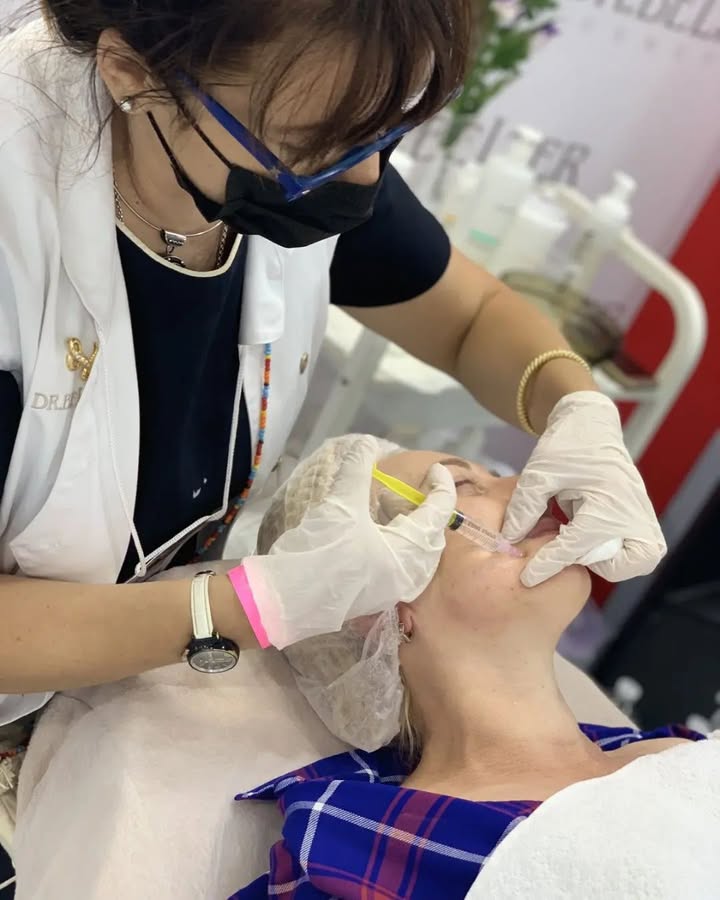
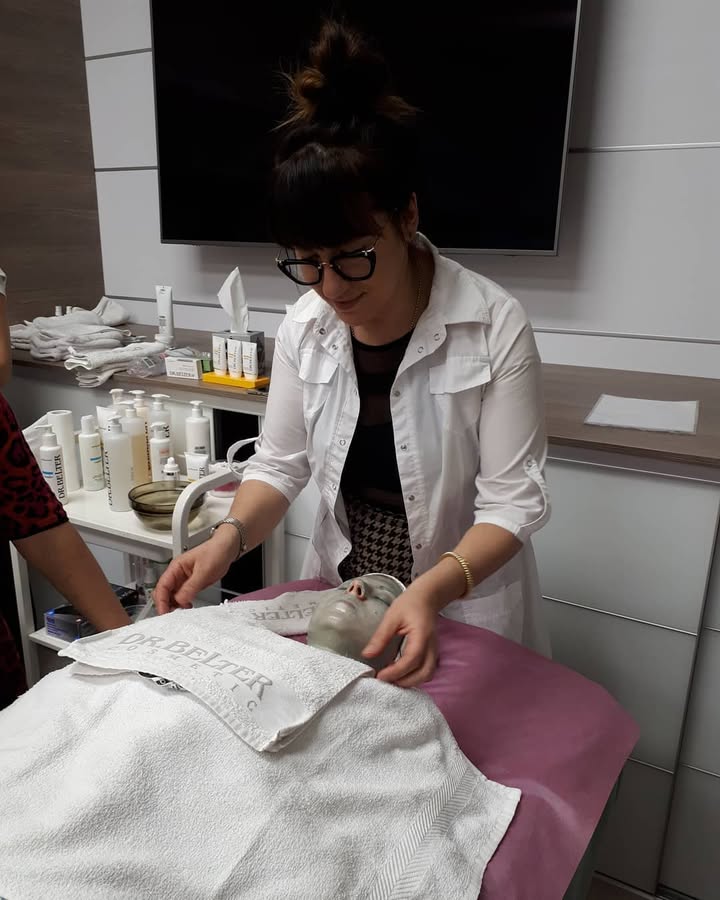
Youth is stolen not only by smoking, alcohol or overeating, but also by the everyday habits we repeat "on autopilot": gadget addiction, the habit of drinking too little water, reading or working lying down, overactive facial expressions, sitting with your legs crossed and poor gait. Drop by drop, they disrupt blood circulation and lymph drainage — and it shows on the face.
Why we don't notice these habits
We spend most of our lives on "autopilot" — an unconscious state resembling a trance or involuntary hypnosis. Watch yourself during the day: your gaze is now fixed, now too focused, now relaxed, while the brain dozes. Alertness or sleepwalking is our choice.
Drop by drop, every day, some habits steal our youth. And in many ways we ourselves are to blame, not the environment or age-related changes.

Gadget addiction
We spend a huge amount of time on our phones — and it is not only the intellect that suffers (in that time you could learn a foreign language, read a book, listen to good music, talk to clever people). The body suffers: the neck stretches towards the screen like a chess knight's.
- Every 2–3 centimetres of head tilt adds 3–4 kg to its weight. The load on the neck muscles is as if a five-litre bottle of water were tied to your head.
- The body starts reinforcing the neck and back muscles with coarse connective tissue, particularly around the seventh cervical vertebra. This is how a "withers" and a "hump" appear, compressing the nerve endings and blood vessels that carry blood to the head.
- This leads to fluid stagnation and, accordingly, swelling. We see it as a double chin, jowls, forehead wrinkles and bags under the eyes.
Drinking too little water
Many scientific papers have been written about the benefits of clean water. I will mention just one thing: it is important and necessary to drink warm water at a rate of 30 grams per 1 kg of body weight. Hydrated skin, flushing out toxins — you know all this.
Reading or working lying down
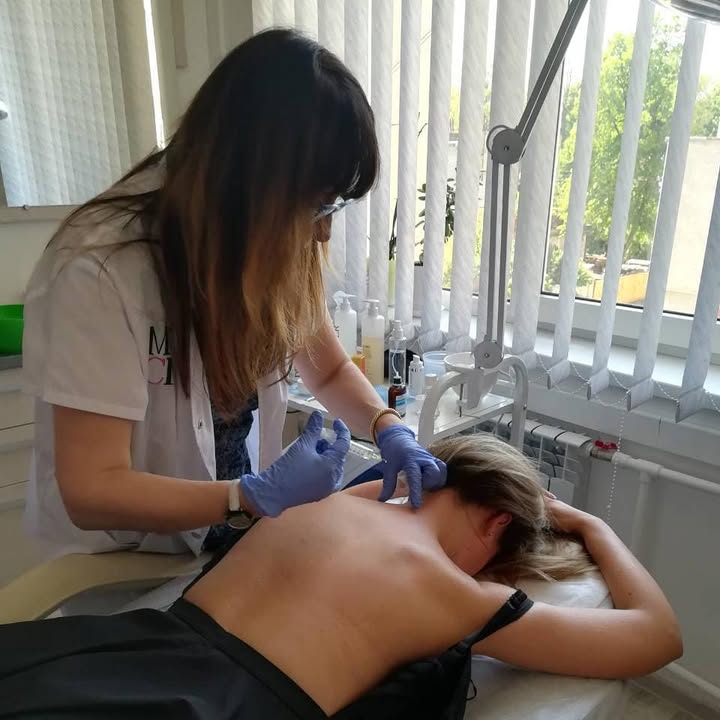
The arms tense, and a wave of contractions passes along the muscle chains to the back, neck and the back of the head. When we tuck in the chin, the whole surface of the neck shortens. The lymphatic and blood vessels there are compressed, circulation is disrupted, and it becomes harder for oxygen to reach the brain.
A year of working remotely revealed a host of aesthetic problems related to exactly this. It is better to prevent than to fight the consequences heroically.
Overactive facial expressions
Repeated muscle contractions create "ravines and cracks" on the face, and no beauty injections will save you here. This habit simply has to be reconsidered.
- It is advisable to use the natural German cosmetics Dr.Belter, with a special focus on relaxing expression lines.
- Applying a cream based on high-quality, skin-identical ingredients to the skin around the eyes is a must.
- A cream for the neck and décolleté should be part of your daily care from the age of 20.
Sitting with your legs crossed
The blood vessels and the peroneal nerve are compressed. This can even contribute to higher blood pressure.

If you are chronically inactive, do at least something:
- squats;
- the plank;
- walk more;
- do not use the lift.
Poor gait
If you walk pigeon-toed, and on top of that on a strange construction called "heels", your health will definitely suffer. The centre of gravity shifts, pain appears in the ankles, lower back and shoulders, the nerve endings are irritated — and the innervation of all organs suffers.
Human gait is unique and inimitable. How to walk correctly:
- Back straight, shoulders back, chin slightly raised, stomach pulled in, feet slightly apart.
- The position is comfortable, the chest is open, breathing is free and even.
- There is no need to sway your shoulders or swing your hips.
- The heel (or the shoe heel) should touch the ground first.
- A gait with the toes slightly turned out is considered the most comfortable and beautiful.
- Walk confidently and beautifully — with a medium stride, neither short nor too wide.
What else helps:
- joint exercises in the morning;
- good-quality shoes;
- orthopaedic insoles if you spend most of the day on your feet.
Habits and their consequences in brief
| Habit | What happens | How it shows |
|---|---|---|
| Gadgets | the head is tilted, the neck is overloaded, the vessels are compressed | double chin, jowls, forehead wrinkles, bags under the eyes |
| Too little water | the skin lacks moisture, toxins are eliminated less well | dehydrated skin |
| Working lying down | the neck shortens, lymphatic and blood vessels are compressed | aesthetic problems of the face and neck |
| Overactive facial expressions | repeated muscle contractions | deep expression lines |
| Crossed legs | the vessels and the peroneal nerve are compressed | blood pressure may rise |
| Poor gait | the centre of gravity shifts | pain in the ankles, lower back, shoulders |
First published on the Biotonika school Facebook page on 25.06.2021.
Questions and answers
Which habits steal youth the most?
Gadget addiction, the habit of drinking too little water, reading or working lying down, overactive facial expressions, sitting with your legs crossed and poor gait.
How does a phone affect the face?
Every 2–3 cm of head tilt adds 3–4 kg to its weight; the neck and back stiffen and compress the blood vessels, fluid stagnates, and the result is a double chin, jowls, forehead wrinkles and bags under the eyes.
How much water should I drink a day?
Warm water at a rate of 30 grams per 1 kg of body weight.
What does a correct gait look like?
Back straight, shoulders back, chin slightly raised, stomach pulled in; the heel touches the ground first, the stride is medium, the toes slightly turned out.